Acrylic vs Silicone Roof Coatings: Which Is Right for Your Commercial Roof?
Short answer: acrylic coatings are the better long-term choice on most commercial roofs that drain, because they can be washed and recoated for decades. Silicone holds up better under standing water but collects dirt, loses reflectivity, and has to be stripped before it can be replaced. White Roofing Systems installs Conklin acrylic roof coating systems. We do not install silicone, and the reasons are below.
The symptom: your flat roof is leaking and someone quoted you a coating
Most building owners meet this question the same way. There is a stain in the ceiling tile, a contractor walks the roof, and two proposals come back that look similar on price but name different products. One says acrylic. One says silicone. Nothing in either proposal explains what happens in year eight.
The real problem: the coating is only as good as the roof under it
Neither chemistry fixes wet insulation, open seams, failed flashings, or a roof that ponds water for days after a storm. Coating over those conditions traps the moisture and buys you two or three years. That is why we start every job with a no-cost inspection and a core sample where the deck is suspect, not with a product recommendation.
Acrylic roof coatings
Acrylic is a water-based elastomeric coating. Conklin introduced its acrylic roof coatings in 1977.
Where acrylic wins
- Renewable.Warranty terms depend on the system, the roof's condition and manufacturer approval; ask the contractor to put them in writing before work starts. If the roof qualifies, there is no tear-off, no landfill, and no disruption to the tenants below.
- Reflectivity that lasts.Cooling savings depend on the building, its insulation and the local climate, so no single percentage fits every roof.
- Substrate flexibility. Metal, EPDM, modified bitumen, BUR, and spray foam all take an acrylic system when they are properly prepped and reinforced at the seams.
- Repairable. A puncture is a patch, not a project.
Where acrylic struggles
- Needs roughly 50 degrees and rising, with dry weather in the forecast, to cure. That shortens the season in northern states.
- Loses mil thickness over time and needs a maintenance coat, usually every 10 years or so.
- Does not belong on a roof that holds standing water for more than 48 hours until drainage is corrected.
Silicone roof coatings
Silicone is a moisture-cured, solvent-based coating most often used over spray polyurethane foam. It shrugs off ponding water and cures in cooler, damp conditions, which is why it shows up on proposals for poorly drained roofs.
Where silicone struggles
- Dirt pickup. The surface stays slightly tacky and holds dust, so reflectivity drops within a season or two and the energy savings go with it.
- Low abrasion resistance and slick when wet. A roof with regular HVAC service traffic takes damage.
- Recoating is expensive. Almost nothing sticks to cured silicone except more silicone. When the system is done, it usually has to be stripped, which erases the cost advantage that sold the job.
- Tears easily without a reinforcing fabric at the seams and penetrations.
Side-by-side
| Factor | Acrylic | Silicone |
|---|---|---|
| Ponding water | Poor until drainage is fixed | Good |
| Dirt pickup / reflectivity over time | Washes clean, stays reflective | Holds dirt, loses reflectivity |
| Foot traffic | Good | Fair, slick when wet |
| Recoat at end of term | Wash and recoat | Strip or silicone-only recoat |
| Application window | 50°F and rising, dry | Wider, tolerates humidity |
| Renewable warranty | Yes | Limited |
How we decide on your roof
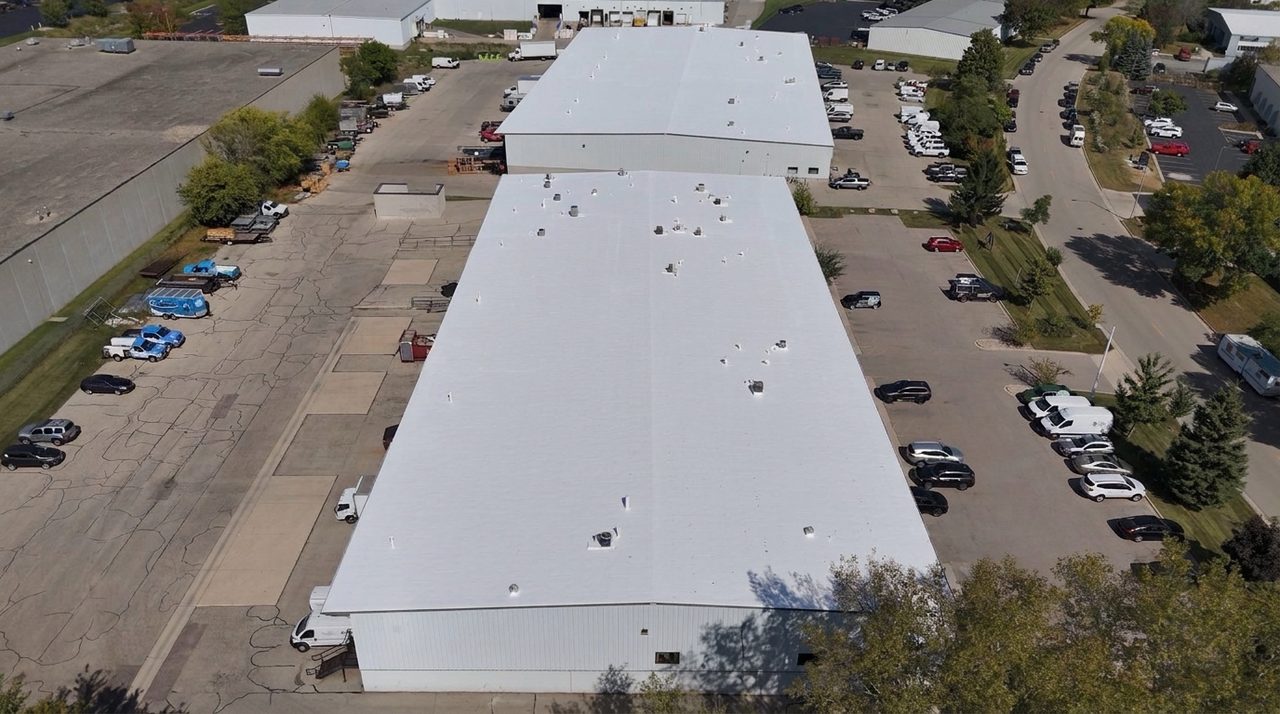
We measure moisture, check the drains and slope, pull the seams and flashings apart where needed, and price the repairs before anyone talks about coating. If the deck is sound and the roof drains, a reinforced Conklin acrylic system over a fabric-embedded base is the system we stand behind, and it can be renewed instead of replaced. If the roof does not drain, we fix the drainage or we tell you a coating is the wrong purchase. See the full lineup on our Conklin roof systems page and real jobs on our work.
Get an answer for your building
A ten-minute conversation and a walk of the roof will tell you more than any product comparison. Request a no-cost commercial roof inspection and a contractor installing Conklin systems in your area will send you photos, moisture findings, and a written scope.
Talk to a contractor installing Conklin systems near you
Every roof in this article behaves differently once you factor in slope, deck type, existing membrane, and local weather. The only way to know which system fits your building is an on-site look by someone who installs these systems for a living.
White Roofing Systems coordinates a network of commercial roofing crews installing Conklin systems across the country. Call (309) 303-3128 or request a free roof inspection and we will route you to the contractor who covers your city. You can also browse the contractor directory by city and state or see real before-and-after projects.
Keep Reading on This Site
Industry Sources
- Cool Roof Rating Council(opens in a new tab)
Third-party reflectance and emittance ratings.
- Cool Roof Rating Council. Building Owner Resources(opens in a new tab)
How reflective roof surfaces lower cooling load.
- U.S. EPA. Using Cool Roofs to Reduce Heat Islands(opens in a new tab)
Measured surface-temperature and energy impacts.
Frequently Asked Questions
Is acrylic or silicone better for a commercial flat roof?
On a roof that drains, acrylic is usually the better long-term value because it can be washed and recoated instead of stripped, and it holds its reflectivity. Silicone performs better under standing water but collects dirt, loses reflectivity, and generally must be removed before a different system can go on.
Does White Roofing Systems install silicone roof coatings?
No. Our contractors install Conklin acrylic roof coating systems. If your roof has drainage problems that would normally push a contractor toward silicone, we correct the drainage first rather than coat over it.
How often does an acrylic roof coating need to be recoated?
Most acrylic systems need a maintenance top coat about every 10 years, depending on climate, roof traffic, and the original mil thickness. Warranty terms depend on the system, the roof's condition and manufacturer approval; ask the contractor to put them in writing before work starts.
Can you apply a roof coating over standing water?
No coating solves ponding. Water standing longer than about 48 hours after rain means the slope or the drains need attention first. Coating over ponding shortens the life of the system and voids most warranties.
What temperature is needed to apply an acrylic roof coating?
Acrylic needs roughly 50 degrees Fahrenheit and rising with dry weather in the forecast so it can cure. In northern states that limits application to the warmer months.