
Conklin Commercial Roofing
EPDM Roof Coatings
EPDM is a black synthetic rubber membrane, and black is the problem. It absorbs solar heat, the processing oils leach out, and the sheet slowly shrinks, hardens, and pulls at its seams. When the roof qualifies, coating it stops that cycle without a replacement.

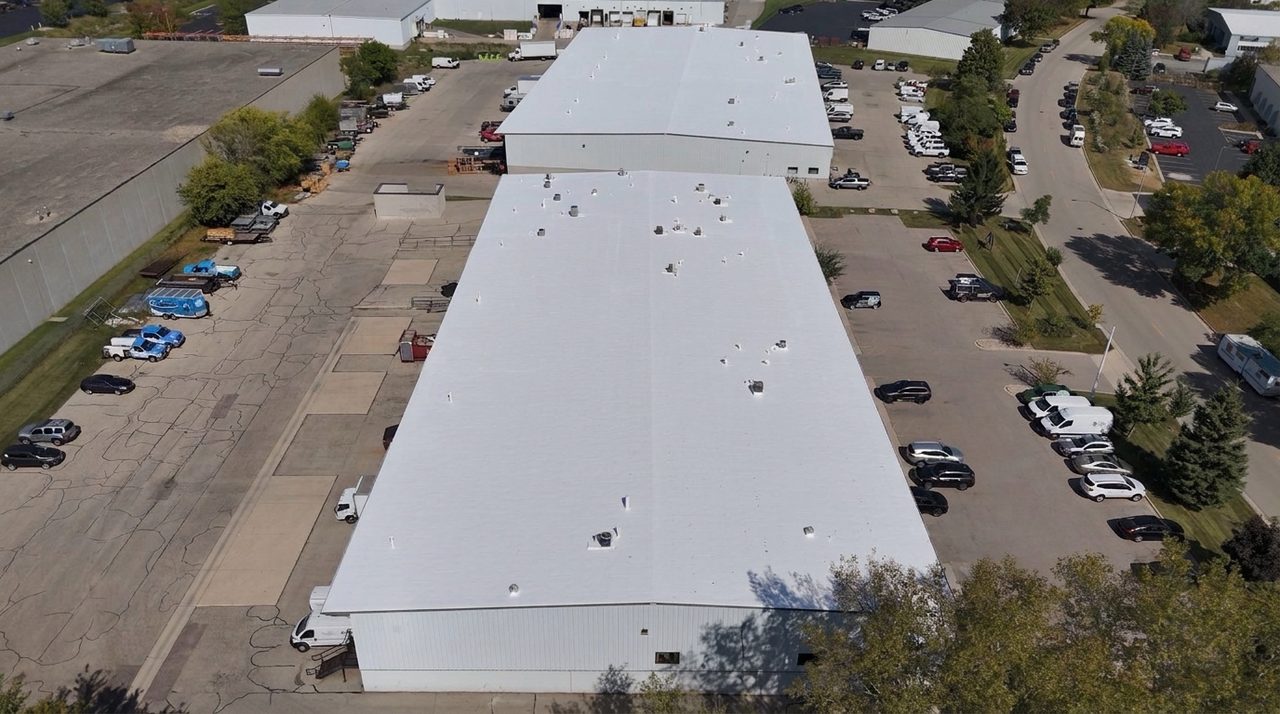
Real project photos from contractors installing Conklin systems in the White Roofing Systems network. See more completed projects
Can you coat an EPDM roof instead of replacing it?
Yes, as long as the insulation under the membrane is dry and the deck is sound. A fabric-reinforced Conklin coating system seals the seams and penetrations, then covers the whole field in a white reflective membrane. The black rubber stays in place, nothing goes to a landfill, and the building keeps operating while the crew works.
Signs your EPDM roof is ready for a coating system
- Seams and laps lifting, splitting, or tenting at the edges
- Leaks around pipe boots, curbs, and drains that keep coming back after caulk repairs
- The membrane feels hard and brittle instead of pliable underfoot
- Shrinkage pulling the sheet away from parapet walls and flashings
- Punctures, scuffs, and patch-on-patch repair history across the field
- Cooling bills climbing while the black roof surface bakes in the sun
Why EPDM fails at the seams first
EPDM sheets are mechanically fastened and joined with adhesive or tape, which means the roof is only as watertight as its seams and details. Those are the parts that move the most and get the most UV exposure, so they are the parts that go first.
The heat makes it worse. A black membrane can run 60 to 80 degrees hotter than a white one on a summer afternoon. That heat drives the oils out of the rubber, and as it loses elasticity it shrinks, which puts steady tension on every seam, flashing, and fastener plate on the roof.
- Adhesive seams dry out and separate under UV and thermal cycling
- Shrinkage pulls flashings loose at walls, curbs, and edge metal
- Ballast and gravel hide moisture until the insulation is already wet
- Caulk-and-patch repairs buy a season, not a decade
How an EPDM restoration is actually done
The roof is pressure washed and rinsed, then every seam, fastener plate, and penetration is reinforced with base coat and polyester fabric so the detail flexes instead of cracking. Only after the details are sound does the field coating go on.
The finish is a white reflective acrylic top coat that sends much of the sun's heat back off the building. Warranty terms depend on the system and manufacturer approval and should be in writing before work starts.
- Free on-site inspection with photos and core samples to check for wet insulation
- Full wash and rinse, then rust-free prep of all metal edge and curb details
- Fabric-reinforced seams, laps, drains, curbs, and pipe boots
- White reflective top coats applied at the specified mil thickness
- Warranty terms in writing before work starts
- If the roof qualifies: no tear-off, no disposal, no shutting the building down
When coating an EPDM roof is the wrong answer
A coating is a membrane, not a cure. If the insulation below the rubber is saturated, coating it seals the water in and you pay for the roof twice. We would rather tell you that during the inspection than after the invoice.
- Core samples show wet or compressed insulation
- The steel or wood deck is rusted through, rotted, or structurally unsound
- Widespread field failure, not just seam and detail failure
- Code limits on how many times the assembly can be recovered have been reached
Frequently Asked Questions
How much does it cost to coat an EPDM roof?
+
How long does an EPDM roof coating last?
+
Will a white coating lower my cooling costs?
+
Can you coat a ballasted or gravel-covered EPDM roof?
+
Do the seams have to be reinforced, or can you just coat over them?
+
Does the building have to shut down during the work?
+
No-cost commercial roof inspection
Get a Straight Answer on Your Roof
Call 1-309-303-3128 or request a free inspection. You get photo documentation, a written proposal, and an honest recommendation, even when that recommendation is to wait.
Keep Reading on This Site
Industry Sources
- National Roofing Contractors Association(opens in a new tab)
Low-slope roofing installation standards.
- Cool Roof Rating Council. Building Owner Resources(opens in a new tab)
How reflective roof surfaces lower cooling load.
- U.S. EPA. Using Cool Roofs to Reduce Heat Islands(opens in a new tab)
Measured surface-temperature and energy impacts.