Straight comparisons of the systems we actually install.
What is a commercial roof coating?
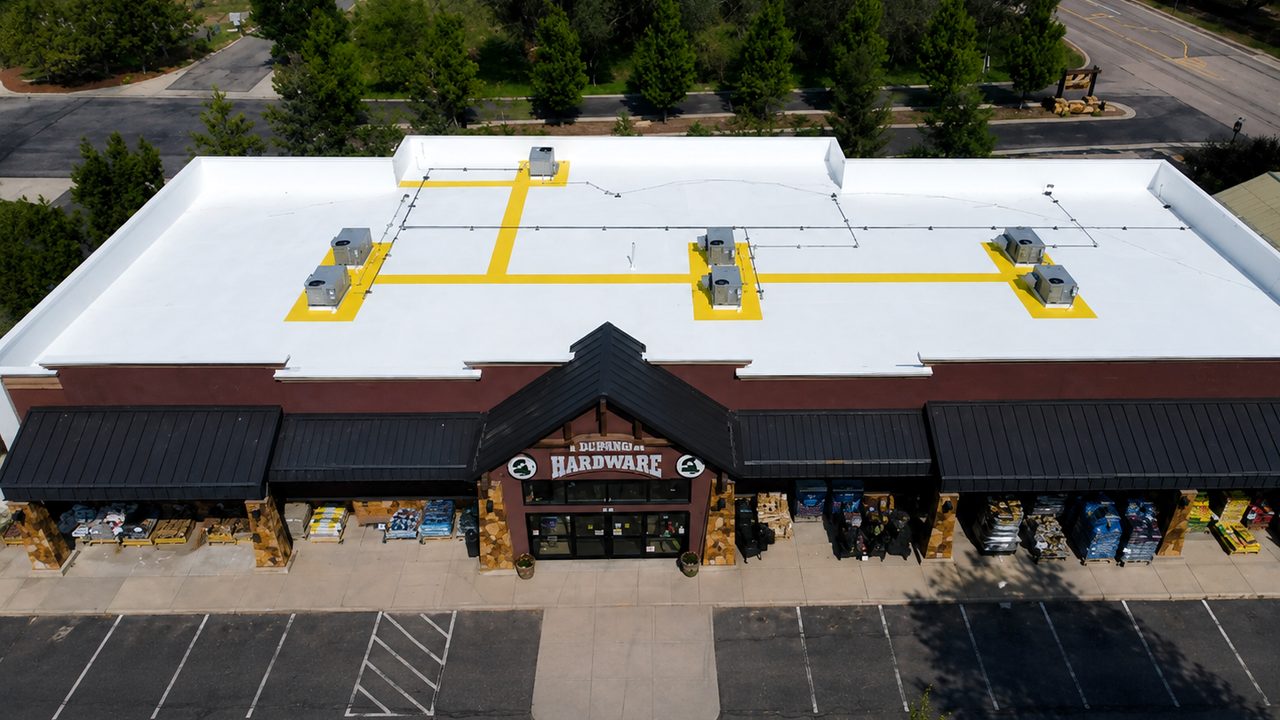
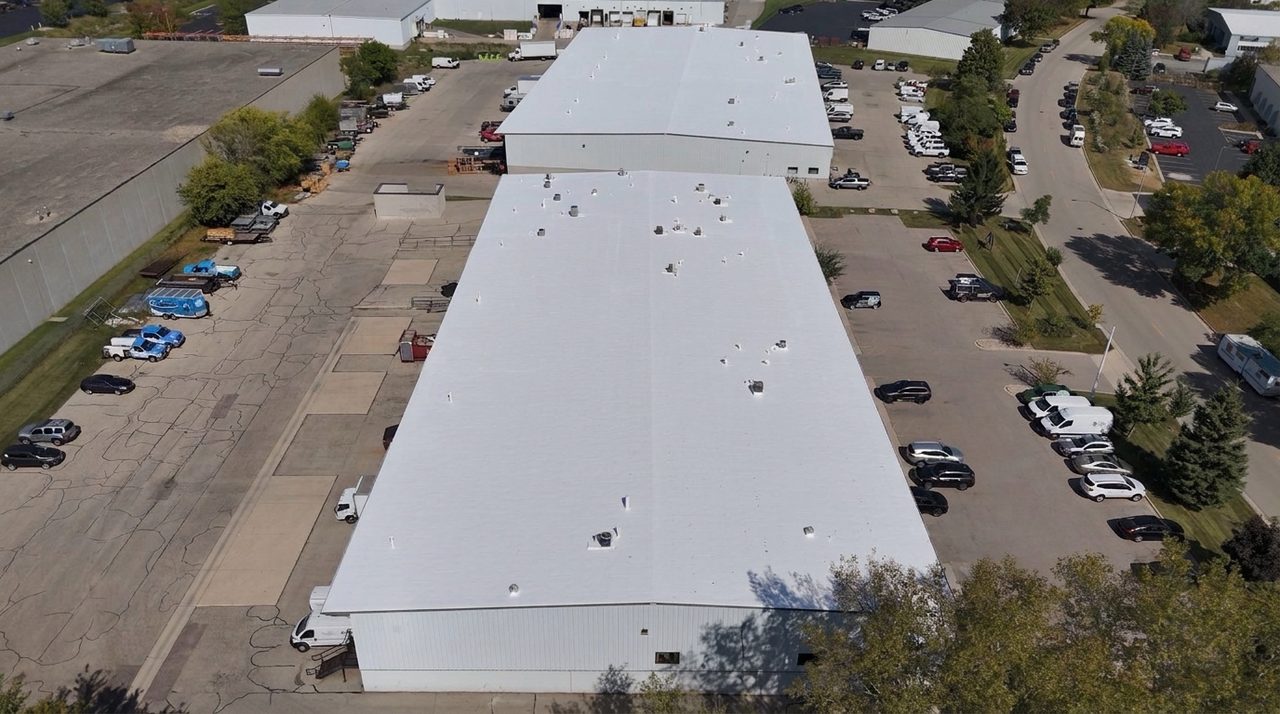
A commercial roof coating is a liquid-applied membrane rolled or sprayed over an existing roof to form a single seamless waterproof layer. Seams, fasteners, and penetrations are reinforced first with tape and polyester fabric, then base and top coats are applied over the entire roof.
Because there are no seams in the finished surface, the most common failure points on an aging commercial roof are eliminated rather than patched.
Conklin roof systems →
What is the difference between acrylic and silicone roof coatings?
Acrylic coatings are water-based, highly reflective, breathable, and re-coatable; silicone coatings are solvent-based, handle standing water well, but attract dirt, lose reflectivity, and are difficult to re-coat later. White Roofing Systems installs Conklin acrylic systems, not silicone.
We chose acrylic because the roof stays renewable. When the top coat wears, it is washed and re-coated rather than stripped and replaced.
Acrylic vs. silicone →
Can a rusted metal roof be restored without replacing it?
Yes. Surface rust is treated with a rust-inhibiting primer, loose fasteners are tightened or replaced, seams are reinforced with butyl tape and fabric, and acrylic base and top coats seal the panels into one continuous surface. No tear-off is required as long as the panels and structure are sound.
If panels are rusted through or the purlins are compromised, restoration is the wrong call and we will tell you so.
Metal roof coating →
What is the difference between TPO and EPDM?
TPO is a white, heat-welded thermoplastic membrane that reflects sunlight; EPDM is a black synthetic rubber membrane usually seamed with adhesive or tape. TPO runs cooler and cuts cooling load, while EPDM is durable in cold climates but absorbs heat and commonly fails at the seams as it ages.
Both can be restored with a coating system instead of torn off, which is usually the lower-cost path once a membrane roof reaches the end of its warranty.
EPDM roof coatings →
How long does a spray foam (SPF) roof last?
A properly installed spray polyurethane foam roof lasts 30 years or more, because the closed-cell foam itself does not degrade. The protective acrylic top coat is renewed roughly every 10 to 15 years, which restarts the warranty rather than replacing the roof.
SPF also adds roughly R-6.5 of insulation per inch, the highest of any commercial roofing material, and it can be sprayed over most existing roofs after cleaning and priming.
Spray foam roofing →
Do roof coatings work on flat roofs with ponding water?
Conklin coating systems are formulated and warranted for ponding-water conditions when applied at full specified thickness over a properly cleaned and primed membrane. Standing water is not automatically disqualifying, but chronic ponding usually points to a drainage problem worth correcting first.
If drains are undersized or the deck has deflected, we address the drainage in the scope instead of coating over it.
Flat roof coating →