White Roof Coating Energy Savings for Commercial Buildings
White Roof Coating Energy Savings for Commercial Buildings
Does a white roof coating really save energy for commercial buildings?
Yes, it does. White roof coatings reflect sunlight and heat away from your building. This keeps the roof surface cooler, reduces the amount of heat that gets inside, and makes your HVAC system work less.
High Cooling Bills and Overworked AC
You might notice your cooling bills are too high, especially in hot months. Or maybe your air conditioning runs almost non-stop, but parts of the building still feel hot and stuffy. Sometimes, the AC unit itself sounds like it’s struggling, cycling on and off constantly.
Dark Roofs Soak Up Heat, Costing You Money
Many commercial roofs are made with dark materials like black EPDM or asphalt. These dark surfaces act like a sponge for the sun's heat. On a sunny day, a dark roof can get over 150 degrees Fahrenheit. This isn't just surface heat; it moves right into your building. Your air conditioning then has to work much harder to fight this heat. This leads to higher electricity bills, more wear and tear on your HVAC equipment, and can even shorten its life. Ignoring this means you’ll keep paying too much for cooling and potentially face expensive HVAC repairs or replacements sooner than you should.
Reflecting Heat with a White Roof Coating System
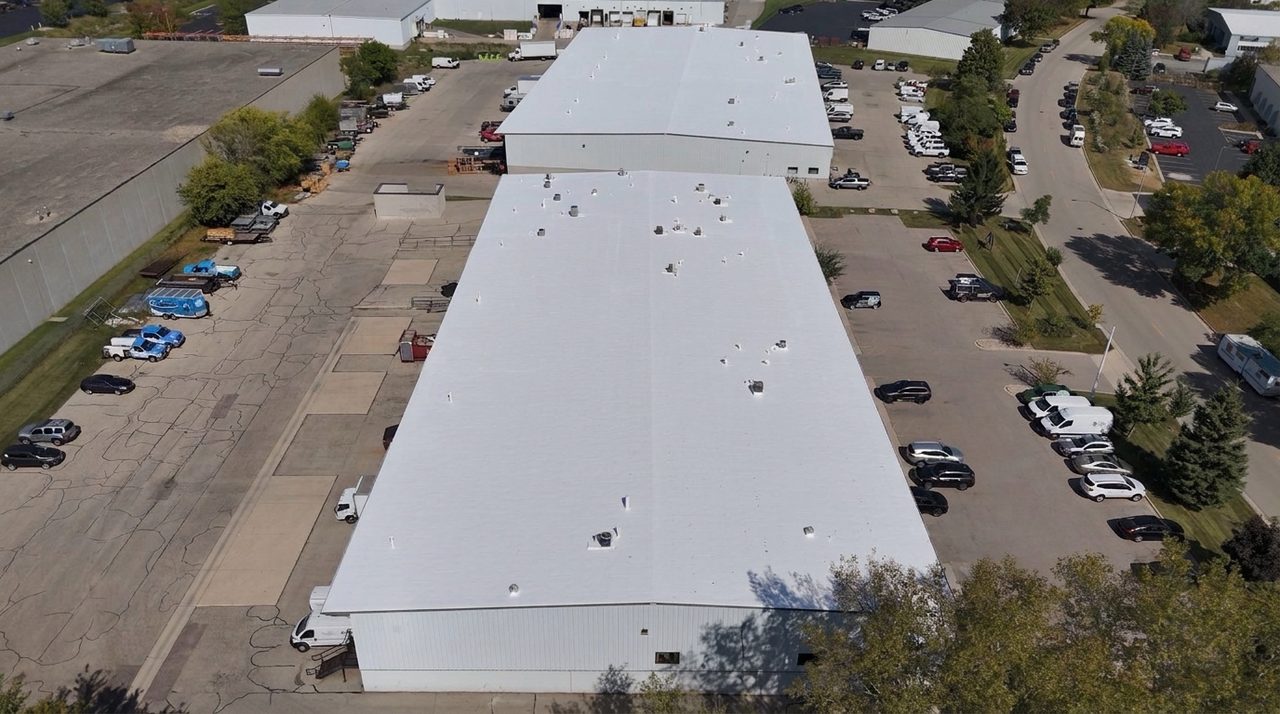
A white roof coating system works by reflecting sunlight instead of absorbing it. We apply a bright, reflective coating directly over your existing roof, as long as it’s a good candidate for restoration. This process significantly lowers the surface temperature of your roof, which directly reduces the heat entering your building. This means your HVAC system doesn’t have to work as hard, saving you money on energy bills and extending the life of your equipment.
How We Do It: The Coating Process
First, we need to make sure your roof is right for a coating. We’ll do a full inspection. We’re looking for things like widespread wet insulation, structural deck issues, or if the roof is just too far gone to restore. If we find these major problems, then a coating might not be the right fix, and we’ll tell you straight up.
If your roof is a good candidate, here’s how the process typically goes:
- Clean the Roof: We start by thoroughly cleaning the entire roof surface. We remove dirt, debris, and any loose materials. This step is crucial for the coating to stick properly.
- Repair and Prepare: Next, we address any existing issues. This might involve patching small cracks, sealing around penetrations like pipes and vents, and making sure the surface is smooth and ready for the coating. For EPDM roofs, this often includes prepping seams.
- Apply Primer (if needed): Depending on your existing roof material, we may apply a specialized primer. This helps create a strong bond between your old roof and the new coating.
- Apply Base Coat: We then apply a tough, durable base coat. This adds another layer of protection and seals the roof.
- Apply Reflective Top Coat: Finally, we apply the bright white, highly reflective top coat. This is the layer that does the heavy lifting, bouncing sunlight and heat away from your building. We use Conklin roof coating systems, known for their reflectivity and durability.
This process usually causes very little disruption to your business operations. It’s also much faster and more affordable than a full tear-off and replacement. You get a “new” roof without the landfill waste.
Frequently Asked Questions
How much energy can I really save with a white roof coating?
The amount of energy you save depends on many things: your building’s location, how hot it gets, how well insulated your building is, and your current roof material. Buildings in hotter climates or with darker roofs often see the biggest savings. While we can’t give you an exact number without seeing your building, it’s common for businesses to see noticeable reductions in their cooling costs. Many of our customers report a significant drop in their electricity bills once the system is in place.
Does a white roof coating work on all types of commercial roofs?
White roof coatings can work on many common commercial roof types, including metal, single-ply membranes like EPDM or TPO, and modified bitumen. However, the condition of your existing roof is key. If your roof has widespread water damage, serious structural issues, or is saturated with water, a coating might not be the right choice. We’ll perform a thorough inspection to tell you if your roof is a good candidate for restoration.
How long does a white roof coating system last?
Service life depends on the roof's condition, the system used and how well it is maintained; ask the contractor to put the expected service life in writing. The exact lifespan depends on the specific product used, the quality of the application, and local weather conditions. Regular maintenance can also help extend the system’s performance and warranty. One of the main benefits is that when the system reaches the end of its life, it can often be recoated, further extending your roof’s life without another tear-off.
Ready to see if a white roof coating can save your business money on energy bills? Give us a call today. A contractor installing Conklin systems from our network can inspect your roof and provide a tailored solution. Call us at (309) 303-3128 or visit our contact page to learn more.
Keep Reading on This Site
Industry Sources
- Cool Roof Rating Council(opens in a new tab)
Third-party reflectance and emittance ratings.
- CRRC Rated Products Directory(opens in a new tab)
Independent ratings for reflective roof products.
- Cool Roof Rating Council. Building Owner Resources(opens in a new tab)
How reflective roof surfaces lower cooling load.
Frequently Asked Questions
Why Heat Buildup Is a Major Commercial Roofing Problem?
Commercial roofs take direct exposure from the sun all day. Dark roofing systems, including EPDM and other traditional materials, absorb a significant amount of solar energy. On hot days, roof surface temperatures can exceed 150 degrees. That heat does not stay on the roof.
How White Roof Coatings Change the Equation?
White roof coatings are designed to reflect sunlight rather than absorb it. This simple difference has a major impact on how a building performs. Instead of trapping heat, a reflective coating sends a large portion of solar energy back into the atmosphere.
Why does white roof coating energy savings in real terms matter?
White roof coating energy savings is not theoretical. It shows up in real-world operating costs. When less heat enters the building, the HVAC system does not have to run as long or as hard.
What is roof temperature reduction matters?
The temperature difference between a dark roof and a reflective roof can be significant. Dark roofs absorb heat quickly, while white coatings keep surfaces cooler. This reduction in temperature does more than save energy.