Commercial Roof Inspection: What Gets Checked and Why
What happens during a commercial roof inspection?
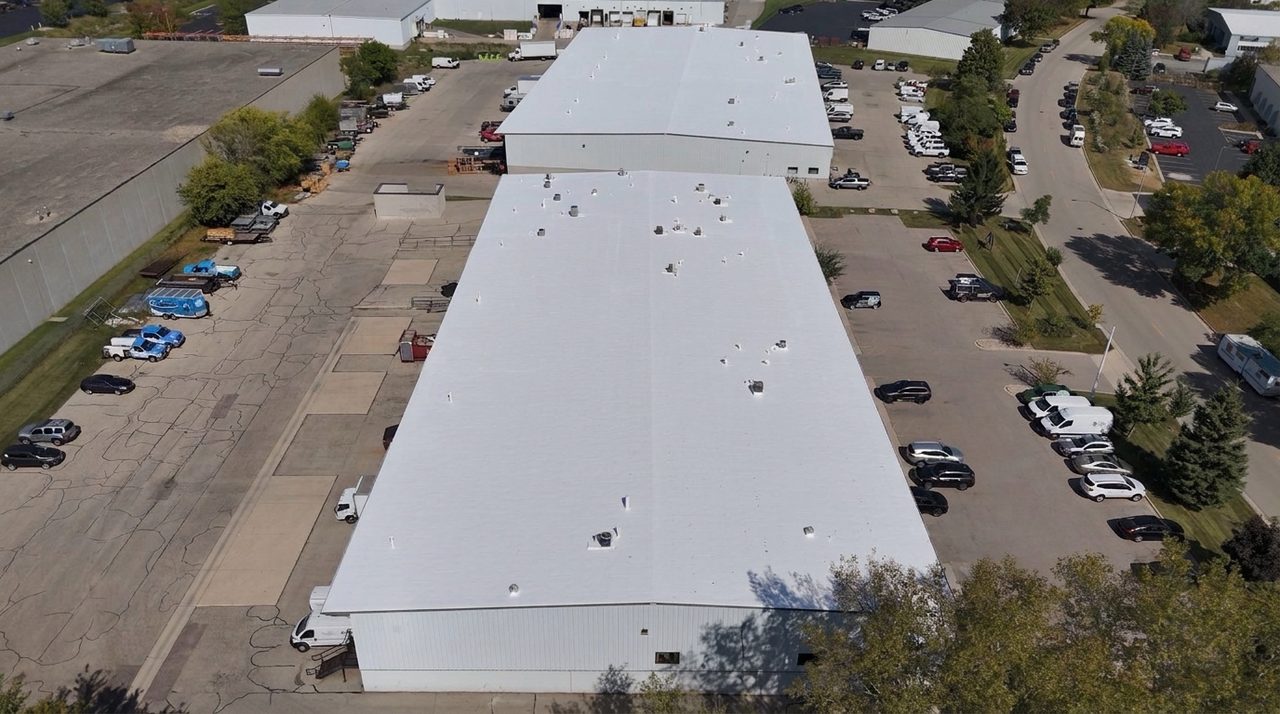
A real inspection is a walk of the entire roof surface plus a look inside the building. The contractor documents the condition of the membrane, every seam and penetration, the drainage, the flashings, and the deck. You should come away with photos, a written condition report, and a clear answer on whether the roof needs repair, restoration, or replacement.
What it is not: someone glancing at the roof from a ladder and handing you a replacement quote.
The symptom: you only find out when it rains inside
Most commercial roofs get looked at for the first time in years on the day a ceiling tile falls. By then the water has been in the assembly for months. Insulation is wet, the deck may be rusting, and the repair that would have cost very little last spring is now a section replacement.
The problem: roofs fail slowly and silently
Low-slope roofs do not announce failure. Seams open a fraction at a time. A drain clogs and holds a few inches of water that nobody sees. A rooftop unit gets serviced and the tech steps on a lap, opening it. Every one of those is cheap to fix on the day it happens and expensive to fix a year later.
Without a scheduled inspection, you find problems on the building's timeline instead of yours.
What a proper inspection covers
- Membrane surface. Blisters, splits, chalking, granule loss, punctures, and ponding water that has not drained within 48 hours.
- Seams and laps. The number one failure point on almost every low-slope system.
- Penetrations. HVAC curbs, vents, pipes, skylights, and anything a trade has added since the roof went on.
- Flashings and edge metal. Parapets, counterflashing, coping, and terminations.
- Drainage. Drains, scuppers, gutters, and downspouts, checked clear.
- Deck and insulation. Soft spots underfoot, moisture probing where the surface suggests it.
- Interior. Ceiling stains, corroded deck from below, damp insulation at the perimeter.
The solution: two inspections a year and one after every major storm
Spring and fall is the standard cycle. Spring catches winter damage from freeze-thaw and ice. Fall catches summer UV damage and clears drains before leaves and snow arrive. Add an inspection after hail, high wind, or any rooftop equipment work, because those are the events that break roofs.
Pair inspections with a written maintenance plan and small repairs get handled while they are still small. That is the whole game. See preventive maintenance for commercial roofs for the cycle we recommend.
One warning about free inspections
We offer a no-cost inspection, and so do plenty of others. The difference is what you get afterward. If the report is a single page recommending a full tear-off with no photos, no moisture findings, and no discussion of restoration, you were not inspected. You were prospected. Ask for the photos.
Talk to a contractor installing Conklin systems near you
No article can tell you what your roof needs. An inspection is the only way to know whether you are looking at a repair or a replacement. A contractor has to walk it, check the seams and penetrations, and look at the deck before anyone gives you a real answer.
White Roofing Systems coordinates commercial roofing crews installing Conklin systems across the country. Call (309) 303-3128 or request a free roof inspection and we will route you to the contractor who covers your city. You can also browse the contractor directory by city and state or look through real before-and-after projects.
Keep Reading on This Site
Industry Sources
- National Roofing Contractors Association(opens in a new tab)
Commercial roofing standards and guidance.
- Cool Roof Rating Council. Building Owner Resources(opens in a new tab)
How reflective roof surfaces lower cooling load.
- U.S. EPA. Using Cool Roofs to Reduce Heat Islands(opens in a new tab)
Measured surface-temperature and energy impacts.
Frequently Asked Questions
Why does ongoing, preventative roof inspections is key to matter?
1 Helping you protect the investment you’ve already made in your commercial roof 2 Keeping your manufacturer’s warranty intact. Neglected roofs are subjected to moisture which will cause damage and shorten the life expectancy of your roofing system.
What are the benefits of regular inspections?
Regular roof inspection eliminates the need for emergency repairs and helps the businesses to expand the lifespan of the roof system. Regular inspection and maintenance of roofs, drains, and downspouts are crucial part of the overall preventive maintenance program of your property.