Elastomeric Roof Coatings: What They Are and How They Work
What is an elastomeric roof coating?
Elastomeric means the cured coating stretches and returns to shape. Applied to a commercial roof, it forms one continuous rubber-like membrane that moves with the building instead of cracking when the roof expands and contracts. That single property is why it works on roofs where rigid materials fail.
The symptom: repairs that crack again in the same spot
You have had a seam or a flashing sealed, and within a season or two the same detail is leaking again. The sealant is hard and split. The patch has separated at the edges.
The problem: rigid materials on a roof that never stops moving
Every roof moves daily. Metal panels move a lot, low-slope membranes move less but constantly, and every joint between two materials moves the most. A hard, brittle sealant has one response to that: it cracks. So the repair fails at exactly the point it was meant to protect.
The solution: a membrane that flexes with the roof
An elastomeric acrylic system, applied at the right thickness over a properly prepared roof, behaves differently. It elongates when the roof expands and recovers when it contracts, over thousands of cycles. That is what lets it hold a seal at seams, fastener heads, and curb flashings, which is where roofs actually leak.
The system is installed in layers, not one pass:
- Clean the roof and correct wet insulation or damaged deck.
- Prime the substrate so the coating bonds. Metal gets a rust-inhibitive primer.
- Detail every seam, lap, penetration, and flashing with reinforcing fabric in base coat.
- Apply base coat and top coat to the specified mil thickness across the full roof.
Thickness is not a detail you can negotiate. An elastomeric coating applied too thin will not perform, will not carry a warranty, and will fail early. That is the most common way these jobs go wrong.
Where they fit
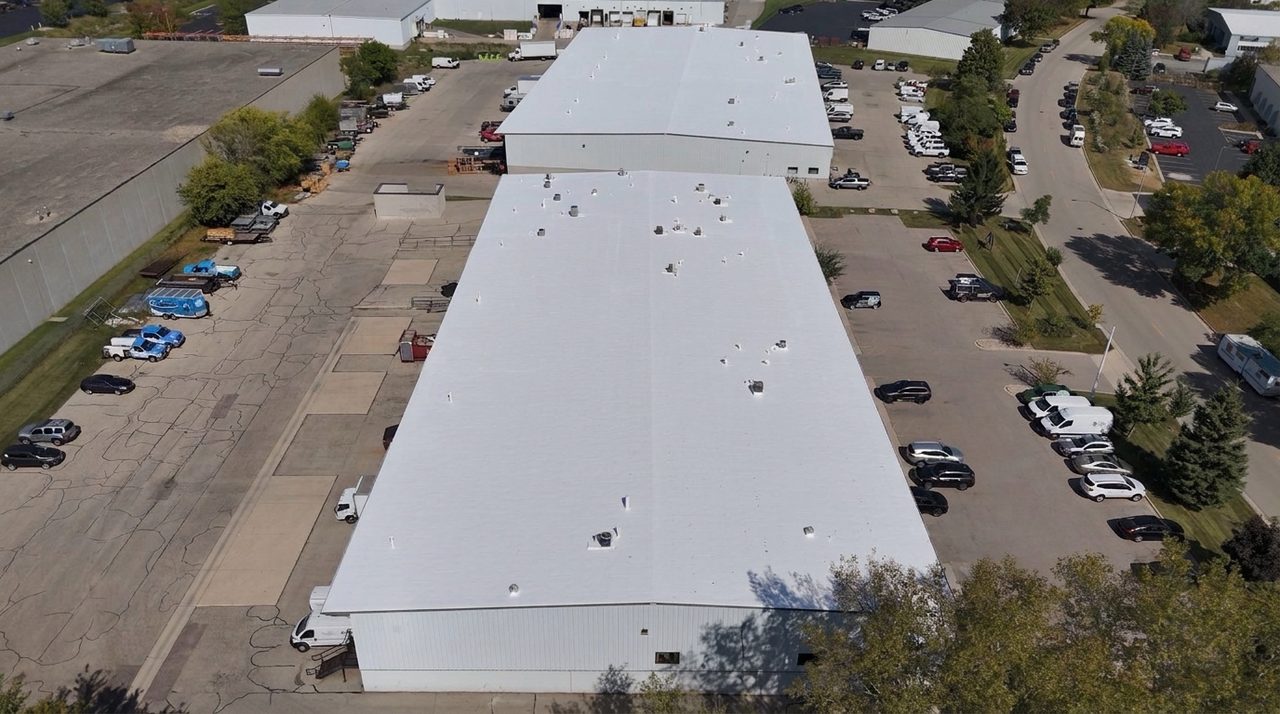
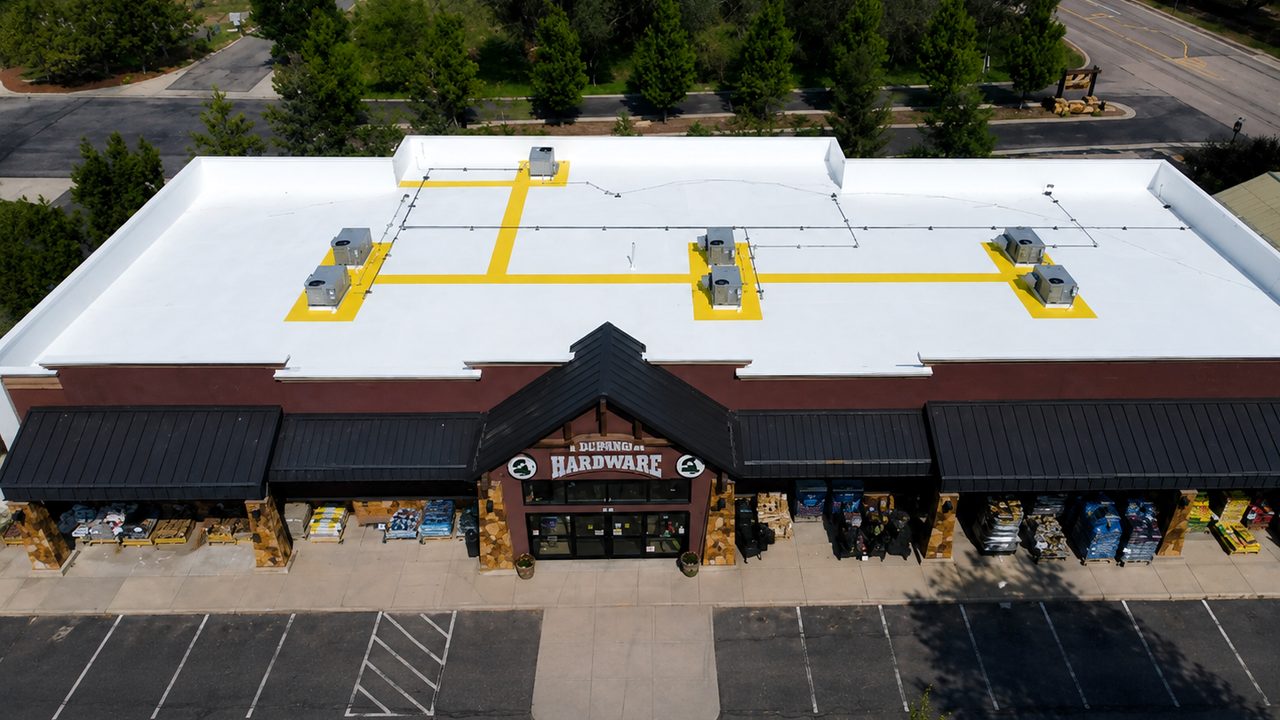
Elastomeric acrylic systems work over metal, EPDM, TPO, modified bitumen, built-up, and spray foam, provided the substrate is dry and sound. White formulations add high reflectivity, which lowers surface temperature and reduces the movement the coating has to absorb.
They are not a fix for a wet or structurally failed roof. Nothing applied to the surface is.
Related: what commercial roof coatings do and how to select the right roof coating.
Talk to a contractor installing Conklin systems near you
No article can tell you what your roof needs. Coating thickness and prep decide whether this works, and both depend on your substrate. A contractor has to walk it, check the seams and penetrations, and look at the deck before anyone gives you a real answer.
White Roofing Systems coordinates commercial roofing crews installing Conklin systems across the country. Call (309) 303-3128 or request a free roof inspection and we will route you to the contractor who covers your city. You can also browse the contractor directory by city and state or look through real before-and-after projects.
Keep Reading on This Site
Industry Sources
- Cool Roof Rating Council(opens in a new tab)
Third-party reflectance and emittance ratings.
- Cool Roof Rating Council. Building Owner Resources(opens in a new tab)
How reflective roof surfaces lower cooling load.
- U.S. EPA. Using Cool Roofs to Reduce Heat Islands(opens in a new tab)
Measured surface-temperature and energy impacts.
Frequently Asked Questions
What is elastomeric roof coatings?
Conklin is the preferred choice in elastomeric roof coatings. Their products have been put to the test for over 35 years now, and they stand behind their products with solid, non-prorated guarantees. Don’t throw your money away with traditional roof replacements.
Why does elastomeric roof coatings matter for commercial buildings?
Conklin is the preferred choice in elastomeric roof coatings. Their products have been put to the test for over 35 years now, and they stand behind their products with solid, non-prorated guarantees. Don’t throw your money away with traditional roof replacements.
What should building owners know about elastomeric roof coatings?
Give us a call today, and we will demonstrate the Conklin difference.
How does elastomeric roof coatings affect roof performance?
Elastomeric cool roofs are formulated completely white to reflect heat and light from the sun.