Is Spray Foam Roofing the Answer to Your Flat Roofing Problems?
Is Spray Foam Roofing Right for Your Commercial Building?
Is spray foam roofing right for your commercial building?
Spray foam roofing, also called SPF (Spray Polyurethane Foam), can be a good choice for many commercial buildings. It creates a seamless, insulated layer over your existing roof, which can fix leaks and save on energy bills. It’s not right for every roof, though, especially if the structure underneath is too damaged.
Ponding Water on Your Flat Roof
You walk on your roof after a rain and see puddles that don't drain. They might be small or cover large areas. This “ponding water” often stays for days after a storm, especially in low spots or “dips” in the roof surface. You might also notice dark stains where water sits, or plants starting to grow in these damp spots.
Why Ponding Water Happens and What It Costs
Most flat commercial roofs are built with a slight slope to drain water. But over time, materials like asphalt, TPO, or PVC can sag, compress, or wear down in certain areas. This creates low spots where water collects instead of draining off. This isn't just an ugly problem; it leads to bigger issues:
- Leaking: Water sitting on your roof for long periods will eventually find its way through seams, cracks, or weak spots. This leads to interior leaks, damaged inventory, and higher repair costs.
- Accelerated Roof Wear: Standing water breaks down roofing materials faster. UV rays from the sun magnify this damage when shining through water. It speeds up the aging of your roof membrane and flashing.
- Structural Stress: A cubic foot of water weighs over 62 pounds. A large puddle can add thousands of pounds of weight to your roof structure, putting stress on beams and decking.
- Hazard for Workers: Wet surfaces can be slippery. This makes it unsafe for anyone who needs to be on your roof for maintenance or repairs.
Ignoring ponding water means your roof will fail sooner, leading to expensive repairs or even a full roof replacement.
How Spray Foam Roofing Works (and its limits)
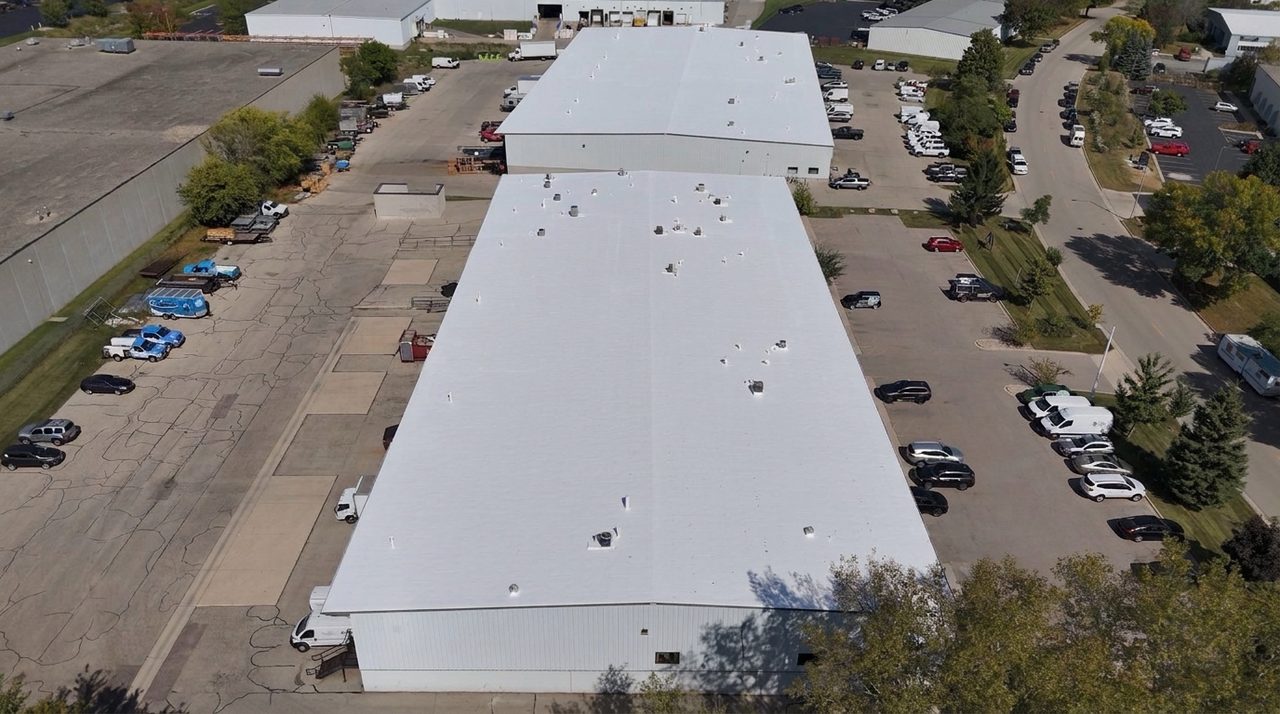
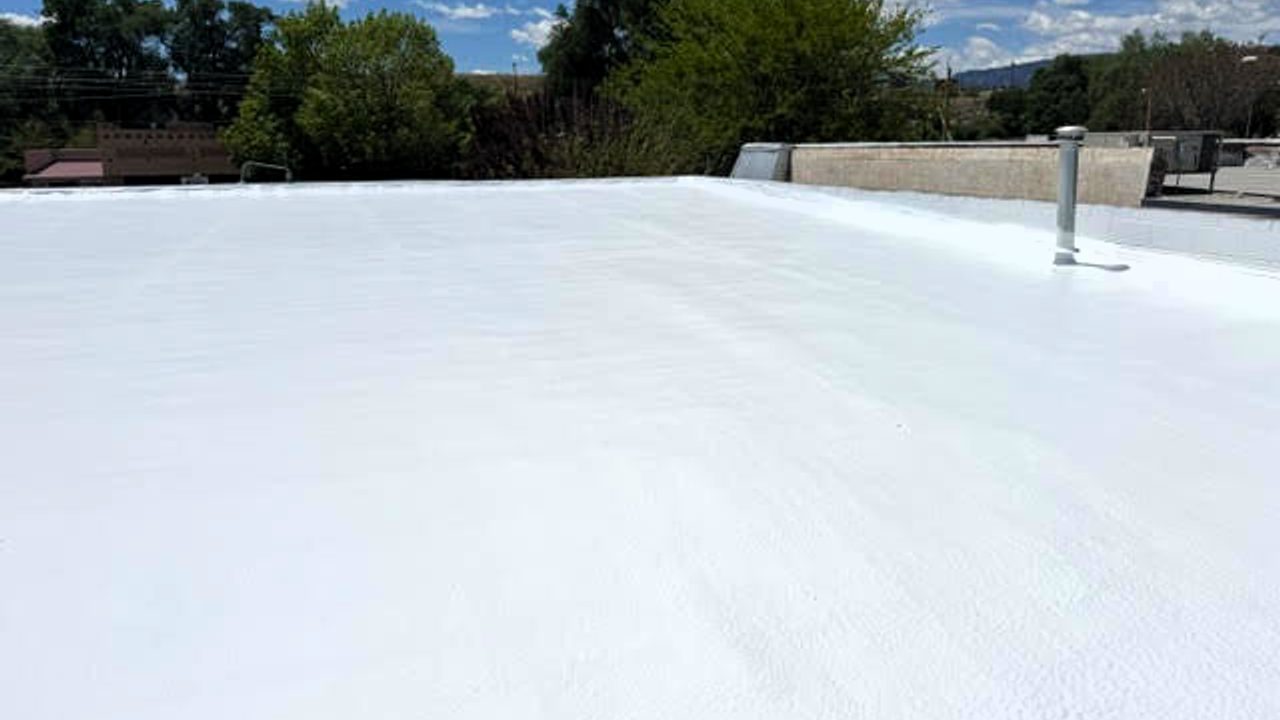
Spray foam roofing uses a two-part liquid that’s sprayed directly onto your existing roof. It expands into a solid, seamless layer of foam. After the foam hardens, we apply a Conklin acrylic topcoat, usually white, to protect the foam from UV rays and weather. This white coating also helps reflect sunlight, reducing your building’s cooling costs.
Here’s how it helps with ponding water and other issues:
- Surface Preparation: First, we clean your roof thoroughly. Any loose debris, dirt, or oil is removed. If there are existing leaks, we repair them before applying foam. If your current roof is too far gone — meaning the deck is rotted, or the insulation is soaked — then spray foam won’t work, and you’ll need a full tear-off.
- Foam Application: The foam is applied directly to the prepared surface. Our contractors installing Conklin systems can adjust the thickness of the foam in different areas. This means we can add more foam to low spots to “build up” the surface and create a positive slope, guiding water toward your drains. This eliminates ponding.
- Seamless Barrier: The foam expands and hardens into a single, continuous layer. There are no seams, fasteners, or gaps for water to get through. This is a major advantage over traditional roofs that often leak at the seams.
- Insulation: SPF has a high R-value, which means it’s a great insulator. It can significantly reduce heat transfer through your roof, leading to lower heating and cooling bills.
- Protective Topcoat: Once the foam is in place and shaped correctly, we apply a durable, reflective acrylic coating. This protects the foam from sun, hail, and foot traffic. It also gives the roof its bright white finish.
A spray foam roof can last for decades with proper maintenance. We’ll explain how to keep it in good shape during your initial inspection.
Frequently Asked Questions
Is spray foam roofing expensive?
The cost of spray foam roofing depends on many things, like the size and condition of your current roof, the thickness of foam needed, and how much prep work is involved. While it can be a significant investment upfront, many building owners find it pays for itself over time through energy savings and extended roof life. We can give you an accurate estimate after a site visit.
How long does a spray foam roof last?
With regular inspections and recoating every 15-20 years, a Conklin spray foam roof can last 30 years or more. Its longevity often depends on how well it’s maintained and the amount of foot traffic it receives.
Can spray foam be applied over any existing roof?
No, not always. The existing roof needs to be structurally sound and relatively dry. If the deck is rotted, or if the insulation under your current roof is saturated with water, we can’t just spray foam over it. In those cases, a full tear-off and replacement might be necessary. Our contractors installing Conklin systems will inspect your roof carefully to see if SPF is a good fit.
If you're dealing with ponding water, leaks, or high energy bills, a spray foam roofing system might be the right answer for your commercial building. Our contractors installing Conklin systems can inspect your roof and tell you if SPF is a good option. Call us today at (309) 303-3128 or visit our contact page to schedule an inspection and get a no-obligation estimate.
Keep Reading on This Site
Industry Sources
- Spray Polyurethane Foam Alliance(opens in a new tab)
SPF roofing application and maintenance guidance.
- Cool Roof Rating Council. Building Owner Resources(opens in a new tab)
How reflective roof surfaces lower cooling load.
- U.S. EPA. Using Cool Roofs to Reduce Heat Islands(opens in a new tab)
Measured surface-temperature and energy impacts.
Frequently Asked Questions
What's the difference between other flat roofing products vs. spray foam roofing for commercial applications?
Several products, including bitumen, thermoplastic olefin (TPO), and polyvinyl chloride (PVC) have been around for more than 30 years in the flat roofing game. Those products are generally applied in a single layer with seams that eventually allow water to penetrate and become leaks. SPF is sprayed into place.
Why does isn’t spf flat? how does it help solve other flat roof problems matter?
SPF does appear to be a flat roof like many other types of flat roofing. Remember that water takes the path of least resistance. The other products we mentioned above give under pressure and weather changes over time. Dips form and water collects; it’s just the natural process of the lifespan of these products.
Is it Time to Replace Your Flat Roof?
10-15 years is the typical lifespan for most flat roof systems. Service life depends on the roof's condition, the system used and how well it is maintained; ask the contractor to put the expected service life in writing. Inspection is fairly simple.
Will a Spray Foam Roof Save You Money?
That depends on the type of roof you currently have and the amount of money you currently spend on repairs. If you’re spending $600 to $1,000 every few months on repairs, then yes, new roofing is on the horizon.