How Roof Color Affects HVAC Lifespan and Energy Costs in Commercial Buildings
How Roof Color Affects HVAC Lifespan in Commercial Buildings
How does roof color affect HVAC lifespan and energy costs in commercial buildings? The color of your commercial roof plays a big role in how hot your building gets. A darker roof absorbs more sunlight, which drives up the temperature on your roof and inside your building. This extra heat makes your HVAC system work harder, shortening its life and increasing your energy bills.Symptom
You might notice your building is too hot, especially on upper floors. Your AC units seem to run constantly, making a lot of noise, or they might even break down more often than you expect. Your energy bills, especially in summer, are higher than they should be, even if you’ve updated other parts of your building.Problem
Dark roofs soak up a lot of the sun's heat. On a hot, sunny day, a dark roof can get up to 170°F or even hotter. This heat doesn't just stay on the roof surface. It moves into your building and heats up the air around your rooftop HVAC units. When your AC units are constantly battling high temperatures, they have to work overtime to cool your building. This extra work causes parts to wear out faster, especially the compressor and electrical components. It’s like driving your car with the pedal to the floor all the time – it's going to break down sooner. If you ignore this, you'll face higher energy costs, more frequent and expensive HVAC repairs, and you'll have to replace your entire system much sooner than planned, which is a major expense.Solution
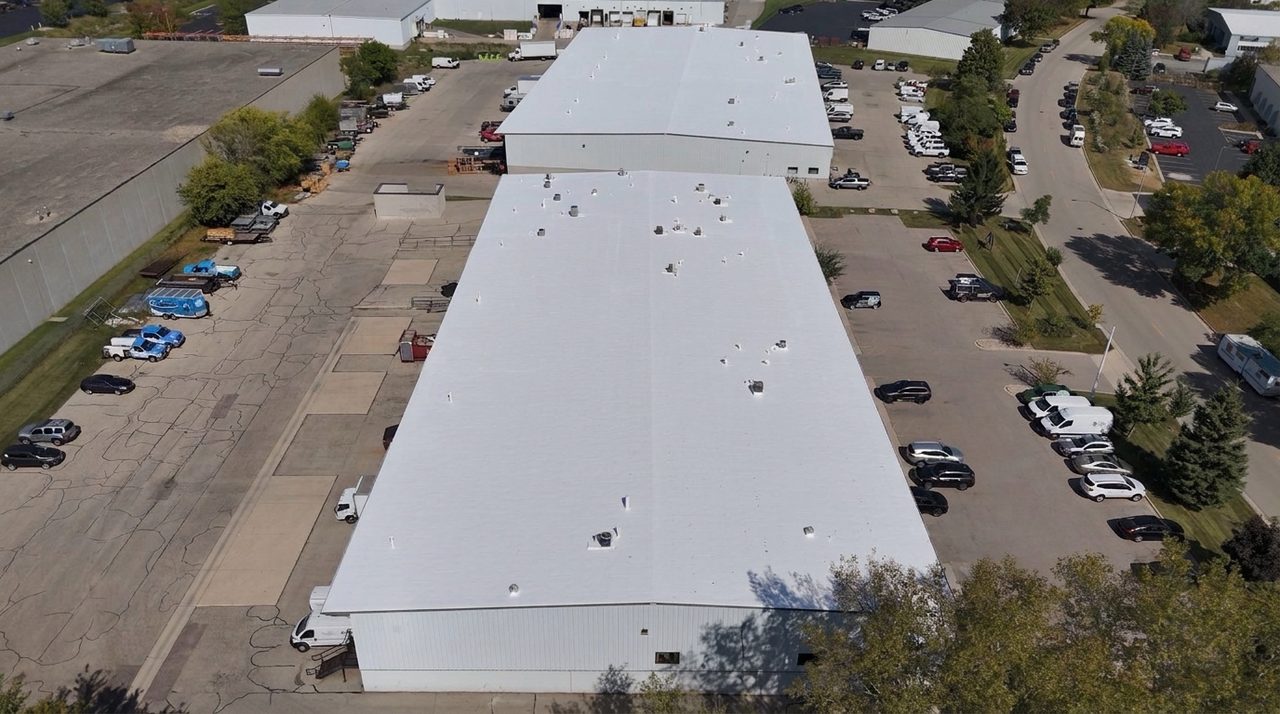
We use Conklin roof coatings, which are bright white acrylic systems designed to reflect a lot of the sun's heat away from your building. Think of it like wearing a white shirt on a sunny day instead of a black one – white stays cooler. Here's how we fix the problem: 1. **Inspection and Repair:** First, we thoroughly inspect your existing roof. We check for any leaks, weak spots, or damaged areas. We repair these problems first to ensure the roof deck is solid. (Honest caveat: If your roof deck is failing or the insulation is completely soaked, a coating might not be the right fit. We'll tell you straight if it's past the point of restoration.) 2. **Cleaning:** We power wash the entire roof surface to remove dirt, grime, and debris. This helps the coating stick properly. 3. **Primer Application:** A special primer is applied to prepare the surface for the main coating. This ensures strong adhesion. 4. **Seam and Penetration Reinforcement:** All seams, vents, pipes, and other penetrations are reinforced with extra coating and fabric to make sure they are watertight. This is crucial for preventing future leaks. 5. **Base Coat Application:** We apply the first layer of our white acrylic coating. 6. **Top Coat Application:** A second, final layer of the bright white coating is applied. This creates a seamless, reflective surface that drastically lowers the roof temperature. By reflecting the sun's rays, our white roof systems can lower your roof surface temperature by dozens of degrees compared to a dark roof. This means your HVAC units aren't working in extreme heat. They don't have to run as long or as hard to keep your building cool. This reduces wear and tear on the equipment, extends its lifespan, and cuts down on your energy bills. This approach works well for many types of commercial roofs, including metal roofs, flat roofs, and EPDM roofs. You can see some of our completed projects in our gallery.Frequently Asked Questions
How much can a white roof really lower my energy bills?
The exact savings depend on your building's size, insulation, local climate, and how inefficient your old roof was. However, building owners often see a noticeable drop in their summer cooling costs because the HVAC system doesn't have to work as hard.How long does a white roof coating last?
Our contractors installing Conklin systems install systems designed to last for many years. With proper maintenance, these coatings can protect your roof for 15 to 20 years, and often even longer. This helps extend the life of your entire roof system, not just your HVAC.Will a white roof work on my type of building?
White roof coatings are a great solution for many commercial and industrial buildings. They are effective on a variety of existing roof types like metal, modified bitumen, built-up, and single-ply membranes. We'll do a full inspection to see if it's the right fit for your specific roof. If your commercial HVAC system is struggling and your energy bills are too high, your roof might be the problem. A contractor installing Conklin systems can inspect your roof and give you an honest assessment. Call us at (309) 303-3128 or visit our contact page to schedule a free, no-obligation roof inspection.Keep Reading on This Site
Industry Sources
- Cool Roof Rating Council(opens in a new tab)
Third-party reflectance and emittance ratings.
- CRRC Rated Products Directory(opens in a new tab)
Independent ratings for reflective roof products.
- Cool Roof Rating Council. Building Owner Resources(opens in a new tab)
How reflective roof surfaces lower cooling load.
Frequently Asked Questions
How Roof Color Affects HVAC Lifespan Through Rooftop Temperatures?
Dark commercial roofs absorb significant solar radiation. On clear summer days, roof surface temperatures can exceed 170°F depending on climate and exposure, as documented by the U.S. Department of Energy. That heat does not remain isolated at the membrane surface.
How Roof Color Affects HVAC Lifespan by Increasing Equipment Heat Stress?
HVAC systems are engineered to operate within specific temperature ranges. When rooftop conditions consistently exceed normal design expectations, several performance issues develop.
Why does 1\. increased compressor run time matter?
Higher rooftop temperatures increase cooling demand inside the building. Compressors cycle longer and more frequently to maintain set interior temperatures. Extended run time accelerates mechanical wear and shortens service life.
What is 2\. electrical component stress?
Motors, capacitors, contactors, and control boards degrade more rapidly under sustained heat exposure. Thermal stress increases resistance, reduces efficiency, and contributes to premature electrical failure.