Step-by-Step Instructions for Flat Roof Installation
What Is Involved in Commercial Flat Roof Installation?
You’re asking about what is involved in commercial flat roof installation.
Installing a new commercial flat roof is a big job. It involves careful planning, removing the old roof, preparing the deck, installing insulation, and then applying the new roofing system. The goal is to make sure your building stays dry and energy efficient for years.
You have an old, leaking, or damaged roof that needs to be replaced.
You might be seeing water stains on the ceiling, leaks during rain, or higher energy bills. Maybe your roof looks visibly old, cracked, or has ponds of standing water after it rains. These are all signs that your current roof is failing and replacement or a major restoration is needed.
Ignoring a failing roof will lead to bigger issues.
If you ignore these symptoms, the problems will only get worse. Leaks can damage your building’s structure, ruin inventory, and create mold. Water can soak into your existing insulation, making it useless and increasing your energy costs. A failing roof means you’re paying more to heat and cool your building, and risking expensive interior damage that’s much harder to fix than the roof itself. Eventually, you’ll face a complete roof replacement that could have been avoided or postponed with timely action.
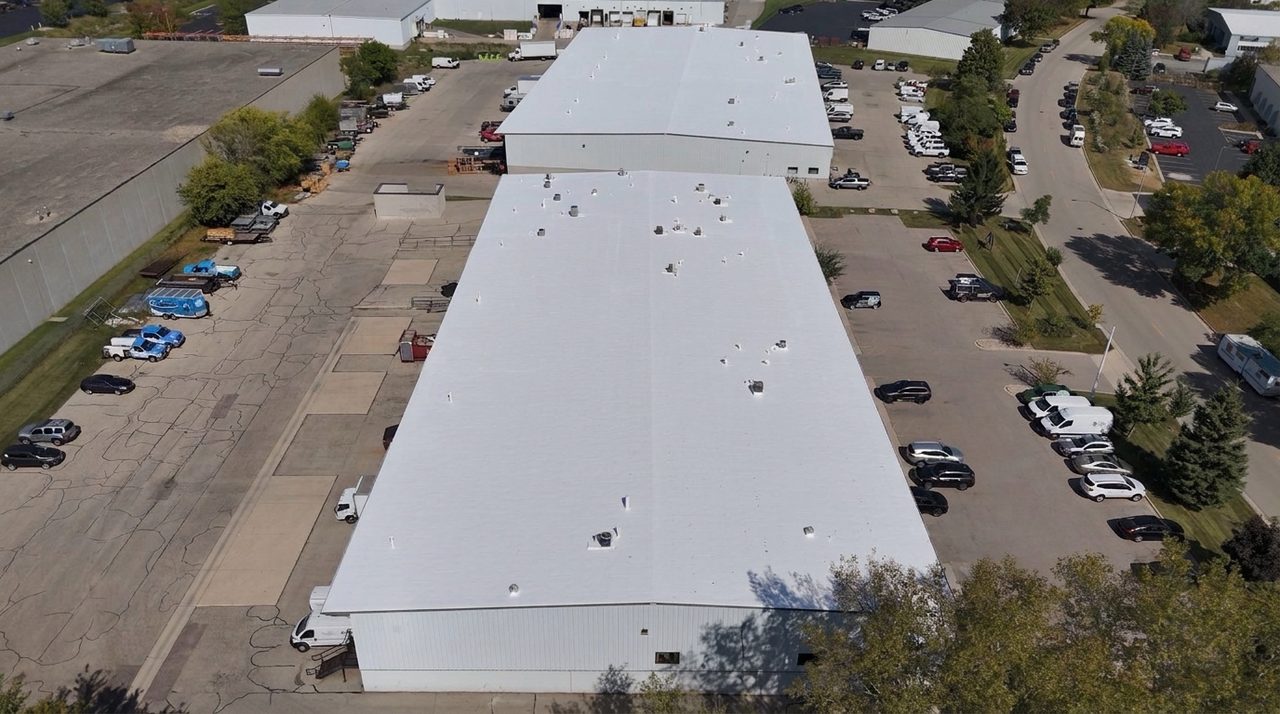
Installing a new commercial flat roof with a Conklin system.
When a roof is beyond repair or restoration, a full replacement is the only way to protect your building. While White Roofing Systems specializes in commercial roof restoration and Conklin roof coatings, some roofs are too far gone for even our advanced systems. In these cases, installing a new roof — or a "tear-off" and re-roof — becomes necessary. We work with contractors installing Conklin systems who can handle this process from start to finish, ensuring your new roof is built to last.
Here’s how a new commercial flat roof installation generally works:
- Inspection and Planning: First, a contractor installing Conklin systems will inspect your current roof. They’ll check the structure, look for water damage, and figure out the best approach. This includes understanding local building codes and getting any necessary permits. We need to know what’s there before we can put something new on it.
- Old Roof Removal (Tear-Off): This is often the messiest part. The old roofing material — whether it’s gravel, EPDM, TPO, or built-up roofing — is completely removed down to the roof deck. All debris is cleared from the site. This step is critical because it reveals the condition of the roof deck underneath. If the deck itself is rotted or structurally unsound, those problems need to be fixed before anything else happens.
- Deck Repair and Preparation: Once the old roof is off, the contractor will inspect the roof deck for any damage, like rot or structural issues. Any necessary repairs are made to ensure a solid, stable base for the new roofing system. A strong deck is essential for a long-lasting roof.
- Insulation Installation: New insulation boards are installed. This is crucial for your building’s energy efficiency. We make sure the insulation is properly laid and fastened to create a continuous thermal barrier, which helps keep your heating and cooling costs down.
- Drainage System Setup: Proper drainage is key to a flat roof’s lifespan. The contractor will ensure that the roof is designed to shed water effectively, often using tapered insulation to create a slight slope towards drains or gutters.
- New Roofing System Application: This is where the new Conklin system comes in. Depending on your building’s needs, this might involve installing new single-ply membranes (like TPO or PVC) or a sprayed polyurethane foam (SPF) system.
- Single-Ply Membranes: These large, flexible sheets are mechanically fastened or adhered to the insulation. Seams are welded or sealed to create a watertight surface. After this, a Conklin coating can be applied to add reflectivity and further protection.
- Sprayed Polyurethane Foam (SPF): This system creates a seamless, insulating, and waterproof layer directly on the deck. After the foam is applied, a Conklin acrylic coating is sprayed over it to protect the foam from UV rays and weather.
- Metal Roof Replacement: If you’re replacing an old metal roof, new metal panels are installed and fastened. These can then be coated with a Conklin acrylic system to seal seams and fasteners and provide a reflective, durable finish.
- Flashing and Detailing: All penetrations (vents, pipes, HVAC units), parapet walls, and edges receive special attention. Flashing — material used to prevent water from entering at these points — is carefully installed and sealed to ensure a watertight finish around every detail.
- Final Inspection: Once the new roof is installed, the contractor performs a thorough final inspection to confirm that everything is correctly installed, watertight, and meets all specifications.
It's important to understand that while we specialize in coating and restoring existing roofs, not every roof can be saved. If your roof insulation is saturated, the deck is rotten, or the existing membrane is severely compromised, a full replacement with a contractor installing Conklin systems is the most reliable long-term solution.
Frequently Asked Questions
Can I just put a new roof over my old one?
Sometimes, yes, if the existing roof structure can handle the extra weight and the old roof is stable enough to serve as a base. However, if the old roof has significant water damage, widespread leaks, or saturated insulation, it usually needs to be removed first. "Layering" a new roof over a bad one often just hides problems that will surface again.
How long does a new commercial flat roof installation take?
The time frame depends on the size of your building, the complexity of the roof, the type of system being installed, and the weather. A small, simple roof might take a few days, while a large, complex project could take several weeks. Your contractor installing Conklin systems will give you a more accurate timeline after their inspection.
What kind of warranty comes with a new Conklin roof?
Warranty terms depend on the system, the roof's condition and manufacturer approval; ask the contractor to put them in writing before work starts. The specific warranty period and coverage will depend on the system chosen and can be discussed with your contractor.
If you have an aging commercial roof that needs attention, whether it’s for restoration or replacement, reach out to White Roofing Systems. We connect building owners and facility managers with a nationwide network of contractors installing Conklin systems. Call us directly at (309) 303-3128 or visit our contact page to schedule a free, on-site roof inspection. We’ll help you understand your options and find the right solution for your building.
Keep Reading on This Site
Industry Sources
- National Roofing Contractors Association(opens in a new tab)
Low-slope roofing installation standards.
- Cool Roof Rating Council. Building Owner Resources(opens in a new tab)
How reflective roof surfaces lower cooling load.
- U.S. EPA. Using Cool Roofs to Reduce Heat Islands(opens in a new tab)
Measured surface-temperature and energy impacts.
Frequently Asked Questions
What materials for flat roofs are used in step-by-step instructions for flat roof installation?
Once you start a project, you’ll have to choose between flat roof materials, but that’s why we are here. Therefore, in the first part of this blog, we will talk about the materials intended for flat roofing and crucial flat roof details. In the other half, we will discover how to install a flat roof.
What is thermoplastic polyolefin (tpo)?
TPO is a single-ply roofing membrane popular due to the fact that this material is durable, energy-efficient, and easy to install. It consists of a single layer of synthetics and reinforcing scrim that offers excellent resistance to UV radiation, weathering, and chemical exposure.
Why does ethylene propylene diene monomer (epdm) matter?
EPDM is a flexible and long-lasting roofing membrane that can withstand a wide range of temperatures, as well as the elements (including UV rays). EPDM roofing can be glued or mechanically fastened to the roof substrate, and it usually comes in massive sheets or rolls.
What is built-up roof (bur)?
Also known as a “tar and gravel” roof, a BUR system is constructed by alternating bitumen layers and reinforcing materials such as fiberglass or organic felts. These layers are applied using hot asphalt or a cold adhesive, forming a continuous and durable membrane.