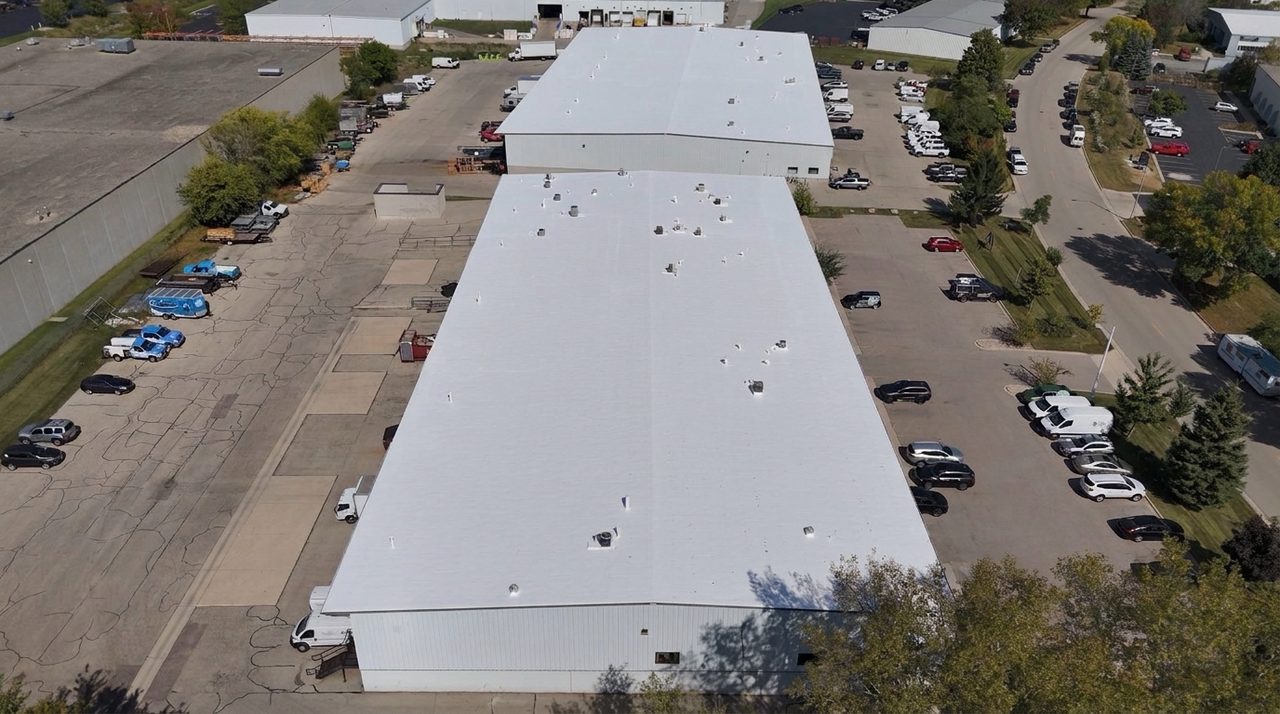
Roof Penetrations: Control Rooftop Work Before It Leaks
Prepared by White Roofing Systems for commercial building owners, property managers, and facility managers.
What is a roof penetration, and why should owners care?
A roof penetration is any place where something passes through the roof: plumbing vents, exhaust fans, HVAC curbs, gas lines, conduit, skylights, roof hatches, equipment supports, and antenna mounts. Each one breaks the waterproof layer and depends on flashing, the seal built around it, to keep water out.
Many penetrations are added or changed years after the roof was installed, often by trades who are not roofers. That makes them something you can manage, not just something an inspector finds later. A simple rule goes a long way: nobody cuts into the roof without permission, and somebody checks the work afterward.
Does this sound familiar?
- A leak shows up a few weeks after a new rooftop unit, exhaust fan, or solar array went in.
- A ceiling stain keeps coming back under the same piece of equipment.
- Someone who went up on the roof found cut membrane, loose screws, piles of caulk, or old pipes nobody uses anymore.
- A pitch pocket (a small box around a pipe or support, filled with sealant) needs topping off again.
- Nobody can say who was on the roof last, or what they did up there.
These are warning signs, not a diagnosis. Water can travel before it drips, so the stain is not always under the cause. Our guide to finding the source of a commercial roof leak covers that step.
The problem: your roof gets worked on by people who don't own it
HVAC technicians, plumbers, electricians, solar installers, and telecom crews all have good reasons to be on your roof. Their job is the equipment, not the roof under it. Tools get dropped, panels get set on the membrane, and a new hole gets sealed with a tube of caulk because the roofer isn't there. That kind of damage may not leak right away, which is why it is easy to miss.
It can also affect your paperwork. A Carlisle sample warranty and care guide, for example, addresses written authorization for alterations and asks owners to keep rooftop traffic records. Those are Carlisle sample terms, not Conklin terms and not proof of what your coverage says. Read your own issued warranty, and ask your roofing contractor whether anyone must be notified before a new penetration is added to your system.
The solution: a five-part rooftop work routine
1. Name one gatekeeper for the roof
Pick one person, usually the facility manager, who controls roof access. Keep the hatch or door locked, hand out keys only for approved work, and keep a sign-in log: date, company, roof area, work done, and any damage noticed. This is the same access log our roof closeout checklist recommends starting when a roofing project ends. Here it becomes an everyday habit.
2. Approve every new penetration before it is cut
Before any vendor adds a hole, curb, support, or attachment, ask four questions:
- What is going through the roof, and exactly where?
- Who will flash and seal it, and do they know how to work with this roof system?
- Does the roof manufacturer or warranty holder need to be told first?
- Can it share an existing opening, or go somewhere that does not block drainage?
Experienced public owners write this kind of rule into their own standards. The Missouri Division of Facilities Management roof design guidelines tell designers to minimize penetrations, remove vents and ducts that are no longer used, space penetrations no closer than 24 inches apart, and use factory-made penetration flashings when possible. Fairfax County’s roofing policy says pitch pockets should be avoided to the extent possible. These are those agencies’ design rules, not a code for your building, but they show what careful owners ask for.
3. Give people a path to walk on
Most foot traffic follows the same route: hatch to equipment and back. Missouri’s guidelines say to provide walkways to all rooftop equipment, and Fairfax County requires walkways in all expected travel areas and around roof-mounted equipment. A marked path keeps boots, carts, and tools on a protected surface instead of wandering across the whole roof.
The right walkway material depends on your roof system, so ask your roofing contractor what is compatible. You can see marked service walkways on a real project in our Durango hardware store case study.
4. Check the roof after other trades leave
Ask every vendor for photos of their work area before and after the visit. After bigger jobs, such as an HVAC replacement or a solar install, have your roofing contractor look at the new penetrations and the walkway route. Smaller visits can be reviewed at your next routine inspection.
Old penetrations deserve attention too. An unused pipe or curb is still a hole in the roof. Have it removed and patched by the roofer, rather than just capped and forgotten.
5. Plan equipment changes together with roof work
If a roof section is due for restoration or replacement in the next few years, talk to your roofing contractor before you schedule a new rooftop unit. Coordinating the two can mean curbs and flashings get done once, instead of being disturbed twice. Missouri’s guidelines even ask that rooftop equipment sit at least 24 inches above the roof deck so the roof can be redone later. Our roof asset management guide shows how to put that kind of timing on a multi-year plan.
A safety note before anyone goes up
Skylights and open hatches are fall hazards. OSHA’s general industry rule, 29 CFR 1910.28(b)(3)(i), requires employers to protect employees from falling through any hole, including skylights, that is 4 feet or more above a lower level, using covers, guardrails, travel restraint, or similar protection. This article is not permission to send staff onto a roof. Have the responsible employer or a qualified safety professional decide who may go up and how.
A rooftop work request you can copy
Company and contact: ___ Date and time on roof: ___
Roof area and equipment: ___
Will any new hole, curb, support, or attachment be added? yes / no. If yes, roof approval is required before work starts.
Who will flash and seal it: ___
Walkway route to be used: ___
Before and after photos attached: yes / no
Damage noticed or caused: ___ Approved by: ___
Send it to every vendor with roof access, and keep the completed forms with your roof records.
Where White Roofing Systems fits
White Roofing Systems connects commercial property owners with roofing contractors installing Conklin roofing systems. When you request an inspection, tell the contractor you want particular attention paid to penetrations, flashings around rooftop equipment, unused openings, and the areas where people walk. Those are the spots this routine is designed to protect.
Before you replace your commercial roof, see if restoration is an option. Whether it is depends on what the on-site inspection finds. Our article on restoration vs. replacement explains that decision.
Request a free commercial roof inspection, call (309) 303-3128, or find a contractor in your area. Tell us where the building is, the roof type if you know it, and whether new rooftop equipment is planned.
Sources and limits
Sources reviewed November 20, 2026: the Missouri Division of Facilities Management roof design guidelines, Fairfax County Public Works roofing policy, Carlisle’s sample warranty and care guide, and OSHA 29 CFR 1910.28, all linked above. They support the management practices in this guide. They do not set requirements for your building, describe your warranty, or replace advice from your roofing contractor, design professional, or safety professional.
Keep Reading on This Site
Industry Sources
- National Roofing Contractors Association(opens in a new tab)
Inspection and maintenance best practices.
- Cool Roof Rating Council. Building Owner Resources(opens in a new tab)
How reflective roof surfaces lower cooling load.
- U.S. EPA. Using Cool Roofs to Reduce Heat Islands(opens in a new tab)
Measured surface-temperature and energy impacts.
Frequently Asked Questions
What is a pitch pocket, and is it a problem?
A pitch pocket is a small box built around a pipe, support, or odd-shaped penetration and filled with sealant. It needs regular checking and topping off. Some public owners, such as Fairfax County, say to avoid pitch pockets where possible. Whether yours should be replaced with a different flashing is something the roofing contractor decides during an inspection.
Can my HVAC contractor seal a new roof penetration?
Check with your roofing contractor and read your warranty documents first. Some warranties address who may alter the roof and require written authorization. Even when it is allowed, ask who will flash the opening and whether that person knows how to work with your roof system.
Do commercial roofs need walkway pads?
If people regularly walk to rooftop equipment, a defined, protected path helps keep traffic off the rest of the roof. Some public owners require walkways to all rooftop equipment. The right walkway material depends on your roof system, so ask your roofing contractor what is compatible.