Commercial Roof Restoration vs. Replacement: How to Decide
Should I restore my commercial roof or replace it?
If the deck is solid and most of the insulation is dry, restoration is usually the better value. If the deck is damaged or the roof is soaked through, you need a replacement. A moisture survey and a walk of the roof settle it. A sales call does not.
The symptom: a roof that leaks, but still looks mostly intact
This is where most building owners get stuck. The roof is 15 to 25 years old. There are a few active leaks, some patched seams, ponding in a corner, and faded or chalky material. One contractor says replace it. Another says it can be saved. Both sound sure.
The problem: replacement often gets quoted before anyone checks what is under the surface
A full tear-off means demolition, dumpsters, landfill fees, and a building that is exposed while the work is done. On a warehouse, school, church, or plant, keeping the business running during the job can cost as much as the roofing itself.
That is worth it if the roof below is gone. It is money wasted if the deck and insulation are fine and only the top layer has worn out.
How to tell which one your roof needs
Restoration is usually a fit when:
- The roof deck is structurally sound.
- Most of the insulation is dry. Small wet areas can be cut out and replaced.
- Leaks are at seams, flashings, fasteners, and penetrations, not across the whole field.
- The roof is metal, EPDM, TPO, modified bitumen, built-up, or spray foam in fair condition.
Replacement is usually needed when:
- The deck is rusted through, rotted, or sagging.
- A large share of the insulation is saturated.
- The roof already has two roof layers and code will not allow a third system over it.
- The membrane has failed across the whole roof, not just at the details.
An infrared or moisture scan finds wet insulation you cannot see from the surface. Ask for one before you sign either kind of contract.
The solution: a restoration system built on the roof you already paid for
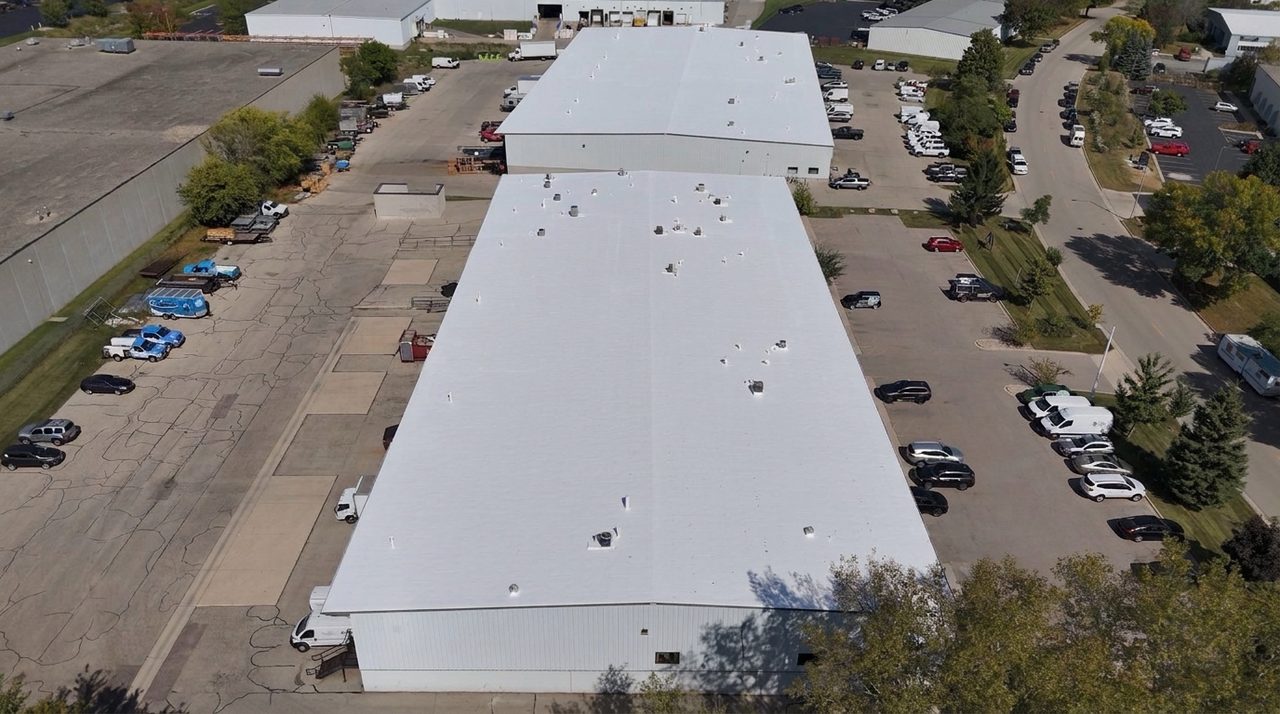
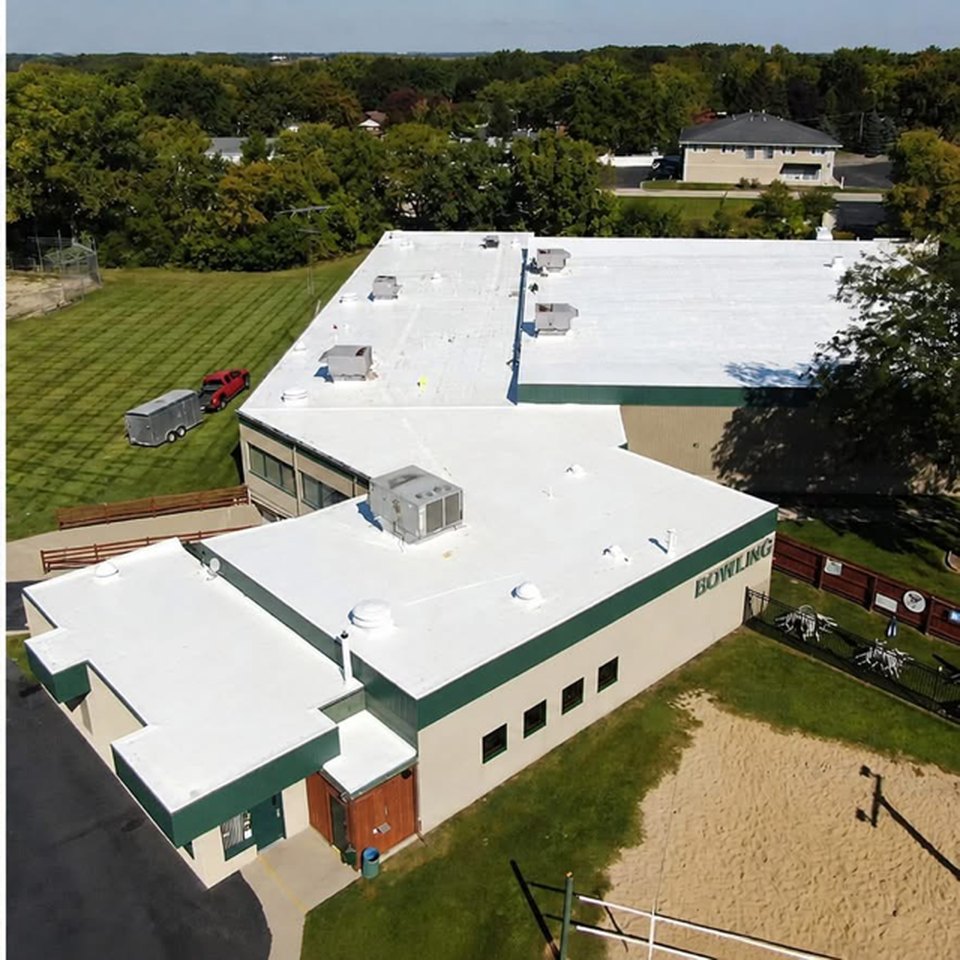
When the roof qualifies, a Conklin-trained contractor cleans it, repairs wet or damaged areas, reinforces seams and penetrations with fabric set in base coat, and applies a seamless reflective top coat. The old roof stays in place and becomes the base for the new system.
- Less disruption. No tear-off, so work usually continues inside the building.
- Less waste. The old roof stays out of the landfill.
- Lower cooling load. A white reflective surface runs much cooler than a dark roof in summer sun. See the EPA's overview of cool roofs.
- Can be recoated later. When the top coat wears, it can often be cleaned and recoated instead of starting over.
- Possible tax advantage. Restoration is often treated as maintenance instead of a long-term capital improvement. Confirm with your accountant. More in our note on the tax treatment of roof coatings.
What about cost?
We do not publish per-square-foot prices, and you should be careful with anyone who quotes one over the phone. Cost depends on roof type, how much wet insulation has to come out, access, detail work, and the warranty length you want. An honest number comes after someone has walked the roof. Our commercial roof cost guide explains what drives the price.
Questions to ask any contractor before you decide
- Did you do a moisture scan or take core samples? Can I see the results?
- How much of my insulation is wet, and where?
- Is the deck sound? How did you check?
- Who backs the warranty: you, the manufacturer, or both?
- If you recommend replacement, why won't restoration work on this roof?
A good contractor answers all five without getting defensive. Read more in choosing a commercial roofing contractor, signs you need a commercial roof repair, and restoring a metal roof with coatings.
Talk to a Conklin-trained contractor near you
No article can tell you what your roof needs. A contractor has to walk it, check the seams and penetrations, and test for moisture before anyone gives you a real answer.
White Roofing Systems coordinates Conklin-trained commercial roofing crews across the country. Call (309) 303-3128 or request a free roof inspection and we will route you to the contractor who covers your city. You can also find a Conklin contractor by state or look through real before-and-after projects.
Keep Reading on This Site
Industry Sources
- Cool Roof Rating Council(opens in a new tab)
Third-party reflectance and emittance ratings.
- Cool Roof Rating Council. Building Owner Resources(opens in a new tab)
How reflective roof surfaces lower cooling load.
- U.S. EPA. Using Cool Roofs to Reduce Heat Islands(opens in a new tab)
Measured surface-temperature and energy impacts.
Frequently Asked Questions
Should I restore or replace my commercial roof?
If the roof deck is sound and most of the insulation is dry, restoration is usually the better value. If the deck is damaged or the insulation is widely saturated, the roof needs replacement. A moisture scan and roof walk decide it.
How do I know if my insulation is wet?
You usually cannot tell from the surface. An infrared or moisture scan, backed by core samples, shows where insulation is wet. Ask for the results before signing any contract.
Can a roof coating go over any commercial roof?
Coatings work over metal, EPDM, TPO, modified bitumen, built-up, and spray foam roofs in fair condition. Wet insulation and damaged deck must be repaired first.
Does restoration disrupt my business?
Usually far less than replacement. There is no tear-off, so most buildings keep operating during the work.
How much does commercial roof restoration cost?
It depends on roof type, how much wet material must be replaced, access, detail work, and warranty length. An accurate price requires an on-site inspection.