Tax Advantage of Roof Coatings vs Roof Replacement
Is a roof coating tax deductible?
Generally, roof restoration is treated as a repair and maintenance expense, which can be deducted in the year the work is done. A full roof replacement is normally a capital improvement, capitalized and depreciated over 39 years for commercial property. That difference changes the after-tax cost of the two options significantly.
We are roofers, not accountants. Your CPA has to make the call for your specific situation. But this is a question worth asking before you sign anything, and most owners never do.
The symptom: the budget only has room for one project this year
The roof needs attention, the capital budget is committed elsewhere, and a replacement quote just landed. The decision looks like defer it or find the money.
The problem: comparing sticker prices instead of after-tax cost
Owners compare a restoration quote to a replacement quote as two numbers. That leaves out two things that matter more than either number.
First, the tax treatment. A cost you can expense this year and a cost you depreciate over 39 years are not the same cost, even if the invoices were identical.
Second, the operational cost of a tear-off. Closed sections, rerouted staff or customers, exposure to weather while the roof is open, noise, and disposal. For a clinic, school, restaurant, or plant, the lost revenue and disruption during a replacement can exceed the roofing difference on its own.
The solution: run both options past your accountant before you decide
Ask your CPA three specific questions:
- Can this restoration be expensed in the current tax year as maintenance?
- If we replace instead, what is the depreciation schedule and the after-tax cost over that period?
- Are there any current energy-efficiency provisions that apply to a reflective roof on this building?
Bring them the actual scope of work from the contractor, not a summary. The treatment depends on what the work is, not on what it is called.
The other side of the ledger
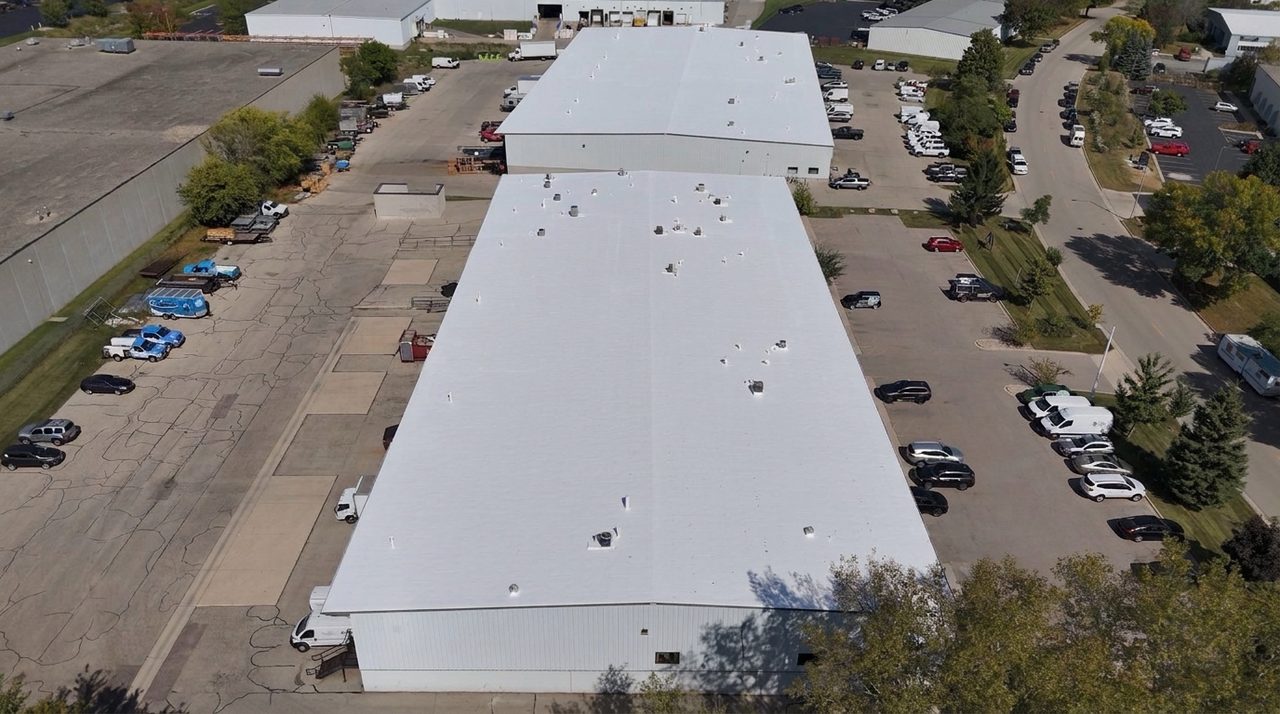
A restoration typically costs substantially less than a tear-off, keeps the building operating, and puts no old roofing material into a landfill. A reflective white surface also lowers cooling load through the summer, which shows up on the utility bill every year rather than once. See white roof coating energy savings.
None of that matters if the roof is not a restoration candidate. If the insulation is wet or the deck is failing, replacement is the right answer and the tax question is moot. That is what the inspection determines.
Talk to a contractor installing Conklin systems near you
No article can tell you what your roof needs. Get the scope in writing first, then have your accountant price both paths. A contractor has to walk it, check the seams and penetrations, and look at the deck before anyone gives you a real answer.
White Roofing Systems coordinates commercial roofing crews installing Conklin systems across the country. Call (309) 303-3128 or request a free roof inspection and we will route you to the contractor who covers your city. You can also browse the contractor directory by city and state or look through real before-and-after projects.
Keep Reading on This Site
Industry Sources
- Cool Roof Rating Council(opens in a new tab)
Third-party reflectance and emittance ratings.
- Cool Roof Rating Council. Building Owner Resources(opens in a new tab)
How reflective roof surfaces lower cooling load.
- U.S. EPA. Using Cool Roofs to Reduce Heat Islands(opens in a new tab)
Measured surface-temperature and energy impacts.
Frequently Asked Questions
What are tax advantage of roof coatings?
As a liquid applied coatings manufacturer, White Roofing Systems compete with those providing membrane alternatives on a daily basis to win restoration business for our contractors.
Why does tax advantage of roof coatings matter for commercial buildings?
There are numerous economic advantages of roof restoration compared to roof replacement, advantages that are quantifiable and quite significant.
What should building owners know about tax advantage of roof coatings?
Roof restoration offers tax advantages when compared to roof replacement because materials and labor costs of the project can be expensed in the same fiscal year rather than these items being capitalized and depreciated as would be the case with roof replacement.
How does tax advantage of roof coatings affect roof performance?
Additionally, roof restoration can be accomplished without the disruption of services experienced with a typical replacement project and the lost revenues and transition costs associated with facility closure.