Commercial Roof Closeout: An Owner’s Handover Checklist
Prepared by White Roofing Systems for commercial building owners, project managers, and facility managers.
What should you receive when commercial roofing work is finished?
Ask for a clear record of the installed roof system, completion reviews, unresolved work, issued warranty documents where applicable, care instructions, and service contacts. Name the person who will keep those records and control future roof access. Together, these make the handover usable—not just a folder of invoices.
This guide is a recommended owner checklist, not a universal contract requirement. Your signed scope, issued warranty, manufacturer requirements, and applicable local rules determine what is required on your project.
The crew has left. Can your facility team take over?
The surface looks finished, but the project manager still has questions. Which drain was repaired? Is that flashing item closed? Has a promised warranty actually been issued? Who should the HVAC vendor call before adding a penetration?
Those are handover questions. They are different from deciding which roof system to buy or preparing the building for installation. A useful test is simple: could a new facility manager find the answers without having met the installer?
The problem: completion and responsibility can get separated
A final photograph records appearance, not everything beneath the surface. An invoice records a charge, not necessarily the installed details. A warranty application is not the same document as an issued warranty.
When records are scattered across email, future staff may not know what was accepted, what remains open, or how to request service. The solution is to connect each item to a roof location, evidence, a responsible person, and a next action.
Use this six-part roof handover checklist
1. Identify what was actually installed
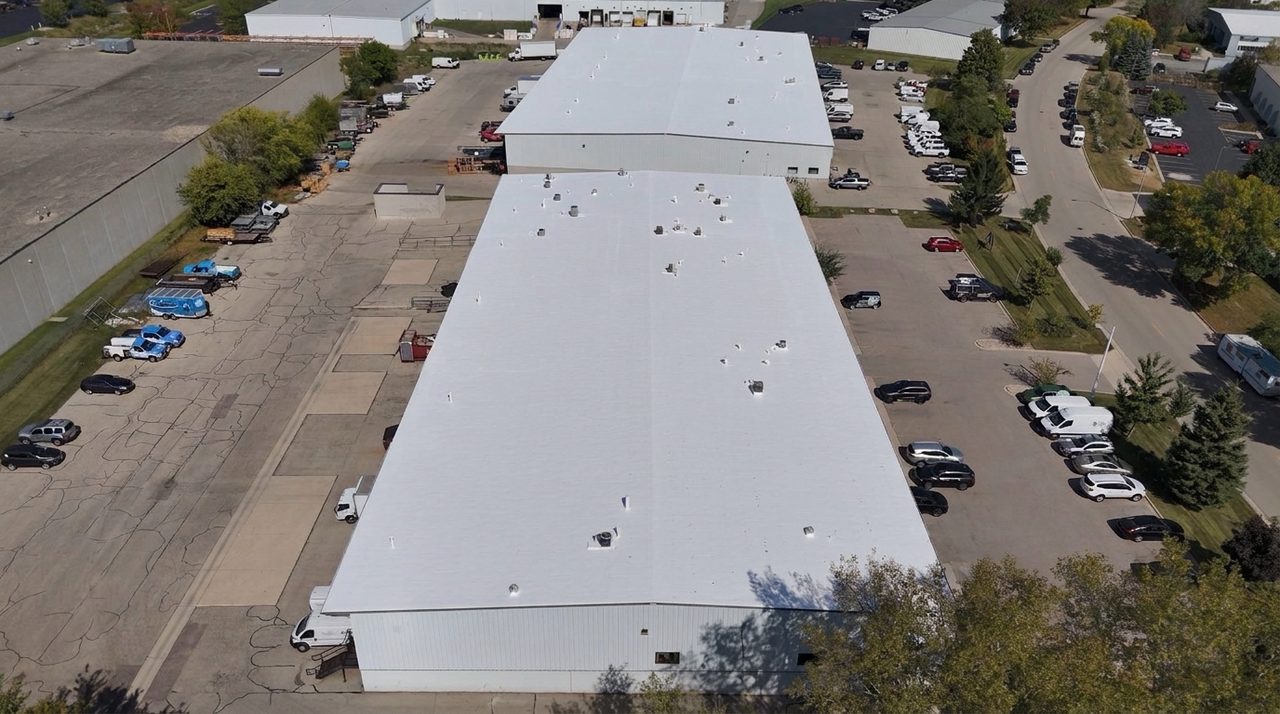
Request a roof-area sketch or marked photographs showing the areas worked on, drains, rooftop equipment, and important penetrations. Label each area consistently so a later service request can identify the same location.
- Record the system and products actually used, not only the original proposal.
- Keep approved changes and the final scope together.
- Request available preparation, concealed-work, and completion photographs. Missing photographs cannot be recreated after layers are covered.
- Keep installation or quality-control records called for by the project documents.
Do not treat photographs alone as proof that installation meets a specification. Technical acceptance belongs with the appropriate contractor, design professional, manufacturer representative, or inspector as the project requires.
2. Separate the different completion reviews
Ask who must review the finished work under your contract. An owner review, a manufacturer review for warranty purposes, and a permit inspection serve different purposes. One does not automatically replace another.
Obtain the applicable review reports and record any outstanding conditions. If an inspection or approval is still pending, name who will arrange it and when you will receive the result. Do not improvise a flood test, core cut, or other roof test to settle a concern; ask the responsible professional what verification is appropriate.
3. Give every open item an owner and a closing record
A punch list is a list of work or questions still needing resolution. Avoid entries such as “check flashing” with no location or next step. Use one line per item:
- Location: the roof area and detail involved.
- Observation: what was seen or what record is missing, without guessing at the cause.
- Responsible party: who will investigate or correct it.
- Next action and agreed date: what happens next and when.
- Closure evidence: the report or photograph, who reviewed it, and the date accepted.
Illustrative example—not a White Roofing Systems project: “North roof, HVAC curb N-2: completion photo missing. Roofing contractor to provide the photo or arrange a review by the agreed date. Project manager records the review outcome.” That is actionable; “HVAC issue” is not.
Do not mark an item closed simply because someone says it is done. Save the agreed evidence. Acceptance and final-payment obligations depend on your contract and applicable law; this checklist is not advice to withhold payment.
4. Confirm the warranty documents, not just the promise
If your agreement includes warranties, request the issued documents and check the building identity, covered roof areas, warrantor, effective dates, exclusions, claim process, maintenance duties, and any transfer conditions. Keep contractor workmanship coverage separate from manufacturer coverage.
The NRCA consumer advisory on roof system warranties cautions that warranty provisions can limit liability and remedies. A long term by itself does not tell you what a problem will cost you.
If registration, an inspection, or manufacturer approval is required for the promised coverage, request confirmation. If issuance is pending, record the person responsible and the follow-up date. Do not assume every product uses the same registration process or warranty conditions.
5. Hand over care and roof-access responsibilities
Get the care instructions for the installed system. Assign who schedules the required maintenance, stores service records, controls keys or hatch access, and approves future rooftop work.
A Carlisle sample warranty and care guide illustrates why this matters: it calls for roof-related records, including maintenance and rooftop traffic logs, and addresses written authorization for alterations or repairs. Those are Carlisle sample terms, not Conklin terms or proof of coverage for your building. Follow your own issued documents.
Give HVAC, solar, and other rooftop vendors a clear contact and approval process before they move equipment, make penetrations, or perform repairs. Start an access log with the visit date, company, work location, work performed, and any reported damage.
A handover checklist is not permission to climb onto the roof. Have the responsible employer or qualified safety professional assess access and task-specific protection. Where owner access is unsafe or unauthorized, request qualified inspection support and location-labeled photographs instead.
6. Make the records easy for the next person to use
Choose one shared location for the roof records and name a facility-side custodian. Include the installed-system record, marked roof map, approved changes, reviews, open and closed punch items, warranties, care instructions, and service history.
List the roofing contractor’s service contact, the applicable manufacturer claim contact, the property decision-maker, and who can authorize repairs. Test the handover by asking someone outside the project to find one open item and the correct service contact.
The Whole Building Design Guide’s commissioning documentation guidance includes an issues-and-resolution log and systems manual. It also says responsibilities vary by project and should be planned. This guide applies that organizing principle to roof handover; it does not suggest every roofing job requires whole-building commissioning.
A handover request you can send to your contractor
Please help us complete the roof handover. Send the installed-system record and roof-area map, applicable completion reviews, a list of open items with responsible parties and agreed dates, issued warranty documents or their pending status, care instructions, and service contacts. Please identify any outstanding acceptance requirements and the process for authorizing future rooftop work. We will assign a facility contact to maintain these records.
Agree on these deliverables before work begins when possible. If the job is already finished, compare the request with your existing agreement and resolve missing information with the responsible parties.
Where White Roofing Systems fits
White Roofing Systems connects commercial property owners with contractors installing Conklin roofing systems. Start with a roof assessment, ask for recommendations based on actual conditions, and discuss the handover records you need before approving work.
Before you replace your commercial roof, see if restoration is an option. Suitability depends on an on-site inspection; a checklist cannot establish it. Our restoration guide covers that separate decision, and our installation preparation guide covers the stage before the crew arrives.
Request a free commercial roof inspection or find a contractor for your area. Tell us your building location, roof type if known, and whether you need an assessment, project planning, or help directing a service question to the appropriate contractor. Coverage and responsibilities should be confirmed with that contractor.
Sources and limits
Sources reviewed October 20, 2026: NRCA’s roof warranty consumer advisory, Carlisle’s sample warranty and care guide, and the Whole Building Design Guide’s commissioning documentation guidance, linked above. They support the recordkeeping and responsibility principles—not a universal checklist, guaranteed performance, or the terms of a White Roofing Systems contractor’s agreement. Your project documents control.
Keep Reading on This Site
Industry Sources
- National Roofing Contractors Association(opens in a new tab)
Commercial roofing standards and guidance.
- Cool Roof Rating Council. Building Owner Resources(opens in a new tab)
How reflective roof surfaces lower cooling load.
- U.S. EPA. Using Cool Roofs to Reduce Heat Islands(opens in a new tab)
Measured surface-temperature and energy impacts.
Frequently Asked Questions
Is a commercial roof punch list the same as a warranty inspection?
No. A punch list tracks unresolved project items. A manufacturer inspection may be required for a particular warranty. Record the applicable reviews separately and confirm who must complete each one under your project documents.
What if the roof warranty has not been issued when work ends?
Record its status, any remaining requirements, the responsible contact, and an agreed follow-up date. Request the issued document when available. An application or verbal assurance is not the same record as an issued warranty; the agreement and manufacturer conditions determine coverage.
Who should keep the roof handover records?
Assign a facility-side custodian and a shared records location. Keep the installed-system information, roof map, completion reviews, punch list, warranties, care instructions, service contacts, and future maintenance and access records together so a new manager can find them.