Cool Roofs: How a White Roof Lowers Building Temperature
What is a cool roof and does it actually work?
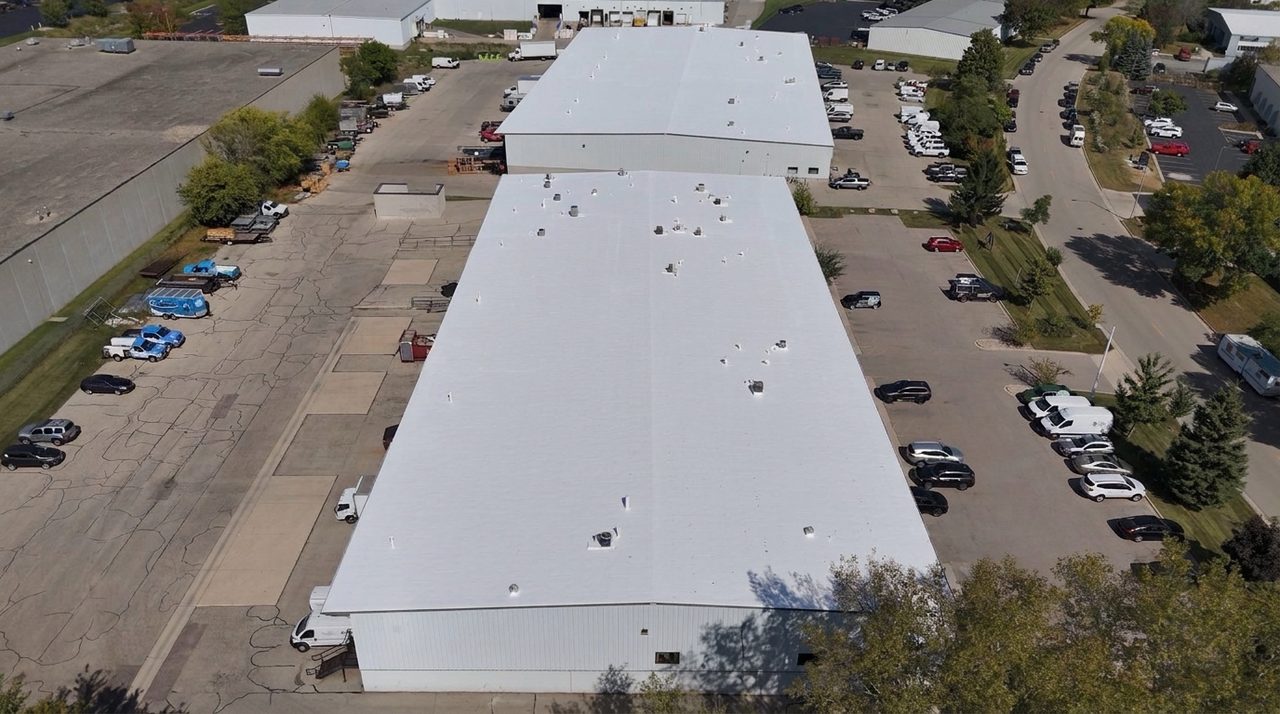
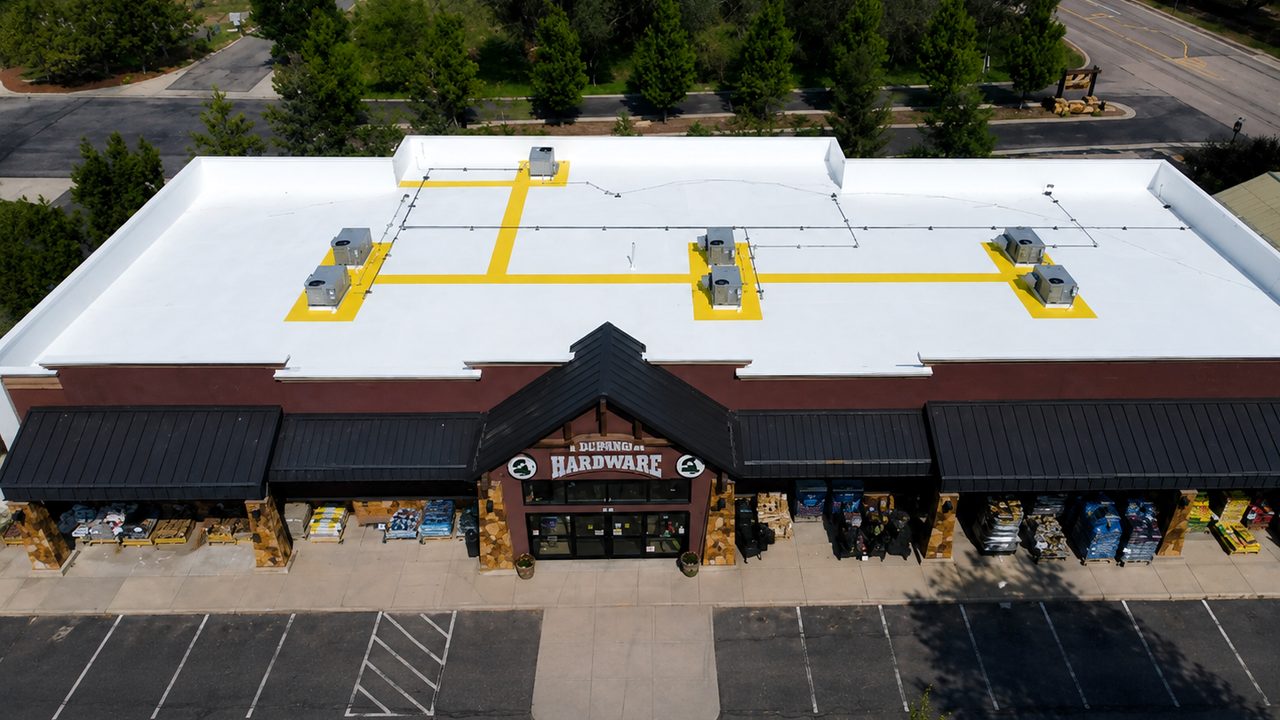
A cool roof is a roof surface that reflects most of the sunlight hitting it instead of absorbing it as heat. On a commercial low-slope building, that is usually a white reflective coating or membrane. The effect is measurable: a dark roof can run well over 150 degrees on a summer afternoon, while a reflective white surface on the same building stays far closer to ambient air temperature.
The symptom: the top floor never gets comfortable
The complaints show up before the roof does. Upper floors that the HVAC cannot hold. Rooftop units running nearly nonstop through July and August. Cooling bills that climb faster than the weather explains. On a warehouse, workers on the floor feeling the heat come down all afternoon.
The problem: a dark roof is a heat collector on your deck
Every degree of roof surface temperature is heat pushing into the building envelope, and heat your cooling system has to remove. It is also heat stressing the roof itself. That daily expansion and contraction is what opens seams, works fasteners loose, and ages the membrane.
And the rooftop units are pulling their intake air off the hottest surface on the property, which is exactly the wrong condition for a condenser.
The solution: reflect the load instead of paying to remove it
A white reflective acrylic coating applied over the existing roof does several things at once:
- Cuts peak surface temperature, often by dozens of degrees, which lowers the cooling load through the deck.
- Reduces thermal cycling, which extends the life of the roof system underneath.
- Lowers intake air temperature for rooftop HVAC, so the equipment runs shorter cycles.
- Seals the roof at the same time, because the coating is a waterproofing system, not paint.
The EPA's work on cool roofs and heat islands covers the building science if you want the underlying research.
An honest caveat
Savings depend on your climate, your insulation, and how your building is used. A well-insulated building in a northern climate sees less benefit than an under-insulated warehouse in the South. Anyone who quotes you a fixed percentage without looking at your building is making it up.
What is consistent everywhere: lower surface temperature, less thermal stress on the roof, and a sealed membrane out of the same job. Related reading: white roof coating energy savings and how roof color affects HVAC lifespan.
Talk to a contractor installing Conklin systems near you
No article can tell you what your roof needs. How much a cool roof saves depends on your building, not on an average. A contractor has to walk it, check the seams and penetrations, and look at the deck before anyone gives you a real answer.
White Roofing Systems coordinates commercial roofing crews installing Conklin systems across the country. Call (309) 303-3128 or request a free roof inspection and we will route you to the contractor who covers your city. You can also browse the contractor directory by city and state or look through real before-and-after projects.
Keep Reading on This Site
Industry Sources
- Cool Roof Rating Council(opens in a new tab)
Third-party reflectance and emittance ratings.
- CRRC Rated Products Directory(opens in a new tab)
Independent ratings for reflective roof products.
- Cool Roof Rating Council. Building Owner Resources(opens in a new tab)
How reflective roof surfaces lower cooling load.
Frequently Asked Questions
Why does some benefits of cool roofs matter?
Save on annual electricity bills by reducing summer air conditioning costs. Save peak electricity demand costs if you have time-of-use metering. Reduce roof maintenance and replacement expenses by extending roof life. Increase indoor comfort in summer by reduction of infrared conversion from visible light.
Why does benefits of cool roofs matter for commercial buildings?
Benefits of cool roofs for people who live in tropical warm climates usually wear light-colored or white clothing to help keep themselves cool. They know that light colors reflect heat and sunlight; whereas dark colors absorb heat and light. Buildings are similar to people.
What should building owners know about benefits of cool roofs?
The benefit of Cool roofs can reduce the roof surface temperature by up to 100 degrees Fahrenheit, thereby reducing the heat transferred into your building below.
How does benefits of cool roofs affect roof performance?
The U.S. Environmental Protection Agency’s former ENERGY STAR roof program assisted building owners and managers with cool roof information and implementation help.