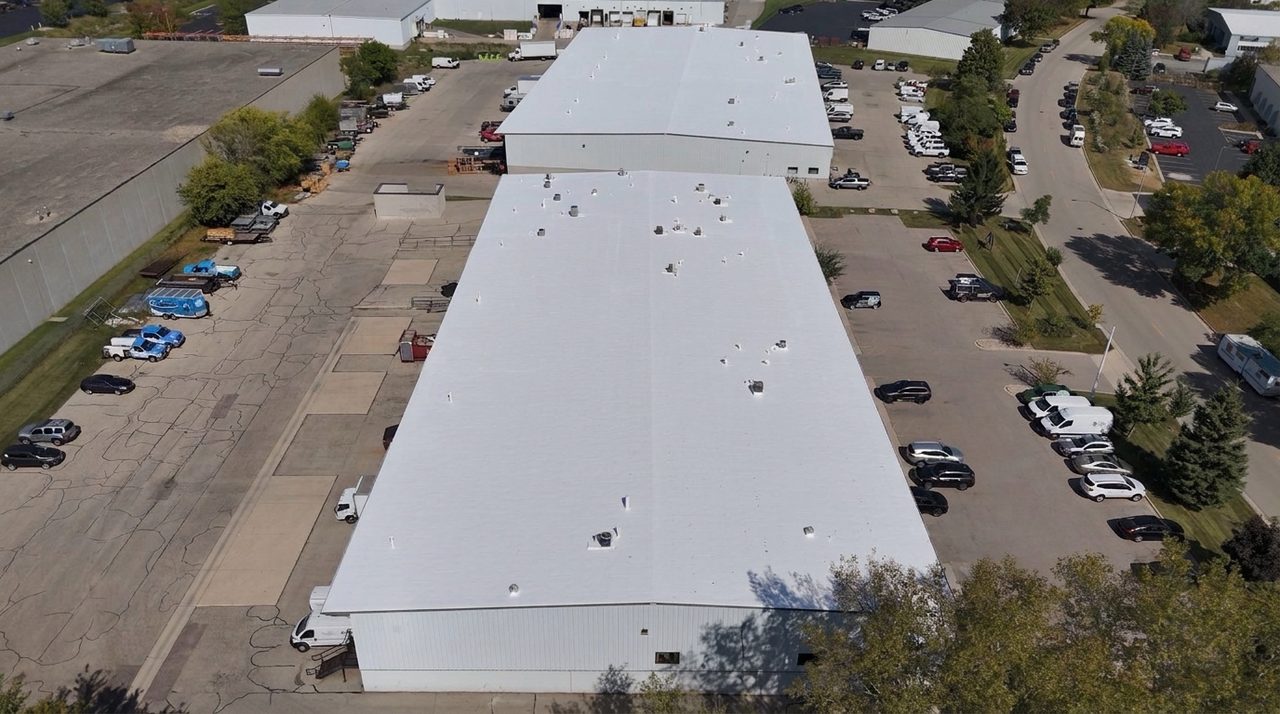
Why Coat a Metal Roof? The Case for Restoration
Why coat a metal roof instead of replacing it?
Because the panels are rarely the problem. On most aging metal roofs the steel still has years left, while the factory finish, the fasteners, and the seams have worn out. Coating restores the protective layer and seals the joints, using the existing roof as the base. When the roof qualifies, you avoid the tear-off, the dumpster, the disposal cost, and the shutdown.
The symptom: rust at the screws and stains inside
The early signs are consistent. Rust rings around fastener heads. Chalky, faded paint. Open end laps you can see daylight through. Ceiling stains that appear only after wind-driven rain. Gutters carrying rusty grit.
Those are all finish and fastener failures, not panel failures.
The problem: the factory finish has a shorter life than the steel
Galvanized, Galvalume, and Kynar finishes are good coatings, but they are designed for a fixed service life. Once UV exposure has worn them down, the substrate is open to weather. Rust starts, and rust does not stop on its own. It spreads under the remaining paint.
At the same time, daily thermal movement is loosening every screw on the roof and opening every lap. Metal expands and contracts more than most people realize, and the fasteners take that abuse continuously.
The solution: a Conklin metal restoration system
- Wash and prime. Rust is treated with a rust-inhibitive metal primer that encapsulates existing corrosion, even on heavily rusted roofs, so it stops advancing under the new system.
- Refasten. Stripped and backed-out screws are replaced with oversized fasteners that grip in the worn holes.
- Reinforce the joints. Seams, ridges, and penetrations get fabric embedded in base coat, so the detail flexes with panel movement rather than cracking.
- Reflective top coat. A white acrylic top coat that reflects the majority of solar energy off the roof.
The reflectivity does more than save cooling energy. A cooler panel moves less, and less movement means fewer new leaks at the fasteners you just fixed. You are treating the cause, not only the symptom.
What you get
A weather-tight, warrantied roof, lower cooling load, a building that keeps operating during the work, and no old panels going to a landfill. Restoration is also normally treated as maintenance for tax purposes rather than a 39-year capital asset. Confirm that with your accountant, and see our summary on the tax treatment of roof restoration.
When restoration is not the answer
Rusted-through panels, damaged purlins, or wet insulation under the deck mean the roof needs metal work first. Coating will not restore structure it does not have. Read how to stop metal roof leaks and our metal roofing overview.
Talk to a contractor installing Conklin systems near you
No article can tell you what your roof needs. Whether your panels are restorable is a five-minute answer once someone is standing on them. A contractor has to walk it, check the seams and penetrations, and look at the deck before anyone gives you a real answer.
White Roofing Systems coordinates commercial roofing crews installing Conklin systems across the country. Call (309) 303-3128 or request a free roof inspection and we will route you to the contractor who covers your city. You can also browse the contractor directory by city and state or look through real before-and-after projects.
Keep Reading on This Site
Industry Sources
- Metal Construction Association(opens in a new tab)
Metal roof panel and fastener standards.
- Cool Roof Rating Council. Building Owner Resources(opens in a new tab)
How reflective roof surfaces lower cooling load.
- U.S. EPA. Using Cool Roofs to Reduce Heat Islands(opens in a new tab)
Measured surface-temperature and energy impacts.
Frequently Asked Questions
Why coat a metal roof?
Owners of metal roofs must maintain their roofs on a timely basis this is why you need to coat a metal roof. Coating allows them to do this. It’s a cost-effective way to renovate and preserve the protective layer on metal roofs.
Why does so why coat a metal roof matter?
Advantages to coating a metal roof include long-term life cycle cost savings and a decrease in the volume of construction materials sent to landfills.